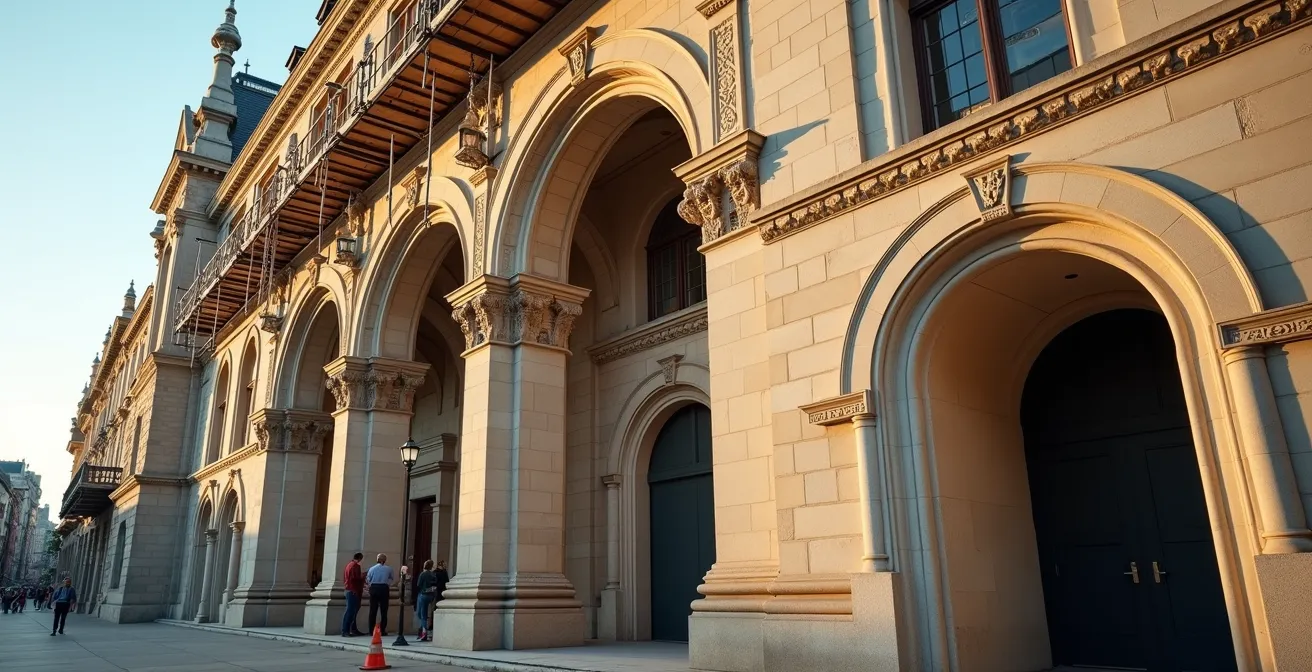
Viewing heritage restoration as a line-item expense is a fundamental strategic error; it is a capital investment with a quantifiable, multi-layered return.
- Restoring a historic site directly increases surrounding property values by a measurable percentage, creating a positive tax-base ripple effect.
- Delaying maintenance is not cost-neutral; it creates a compounding financial liability that can double repair costs in under a decade.
Recommendation: Shift budget discussions from “How much does this cost?” to “What is the projected ROI of this asset and the compounding cost of inaction?”
For any local policymaker or community stakeholder, the debate over a crumbling historic building often boils down to a single, contentious question: can we afford it? The conversation typically frames preservation as a sentimental luxury, a drain on public funds that could be better spent on more “practical” projects. Budgets are tight, and the tangible, immediate allure of new construction often overshadows the perceived cost of saving the old. This viewpoint, however, is not just short-sighted; it is economically flawed.
The common arguments in favor of preservation—that it boosts tourism or creates temporary construction jobs—while true, barely scratch the surface. They fail to capture the full financial picture. The real discussion should not be about expenditure, but about investment. It’s a paradigm shift from viewing a historic building as a liability to be managed to seeing it as an underperforming asset in a community’s portfolio. The failure to invest doesn’t just mean a loss of character; it represents a direct and escalating financial loss through asset depreciation and missed revenue opportunities.
This article moves beyond the platitudes to build a robust economic case for heritage restoration. The true key is not just preserving history but leveraging it as a powerful economic engine. We will demonstrate that strategic restoration is a direct investment in a neighborhood’s real estate value, a preventative measure against compounding financial decay, and a catalyst for sustainable, long-term revenue. We will analyze the ROI of different reuse strategies, the cost-benefit of modern restoration technologies, and the new funding models that make these projects more viable than ever. The data shows that restoring old stones is not a cost—it is one of the smartest investments a community can make in its own future.
To fully grasp the economic levers at play, this analysis will break down the return on investment from multiple angles. The following sections provide a clear, data-driven framework for evaluating and championing heritage projects not as expenses, but as cornerstone economic strategies.
Summary: Why Restoring Old Stones Is an Economic Engine, Not a Cost
- How a Listed Monument Increases Neighborhood Real Estate by 20%
- The “Wait and See” Strategy That Doubles Restoration Costs in 5 Years
- Museum or Boutique Hotel: Which Save Strategy Fits Your Building?
- Laser vs. Chemical Cleaning: Removing Grime Without Dissolving History
- How to Crowdfund a Restoration Project When Grants Fail
- Pricing the Hours: Can Traditional Craft Pay a Living Wage?
- Granite vs. Sandstone: Building for the Next Millennium
- Why Every Government Building Looks Like a Greek Temple
How a Listed Monument Increases Neighborhood Real Estate by 20%
The most direct and quantifiable return on a heritage investment is its “value ripple effect” on the surrounding area. A well-maintained historic building or a designated historic district acts as an economic anchor, stabilizing and increasing property values in its vicinity. This is not a matter of sentiment; it is a documented market phenomenon. Homebuyers and businesses are willing to pay a premium for the character, stability, and unique sense of place that these areas offer. This increased demand directly translates into higher property values, a stronger tax base, and greater community wealth.
The data is compelling. Across various markets, research shows historic designation increases property values by 5% to 20% on average, and in some cases, significantly more. A landmark 2011 study focusing on Connecticut, for example, found that historic district designation could raise property values by almost 20% per year in certain areas. This isn’t a one-time bump; it’s a sustained premium that protects a neighborhood from the volatility often seen in areas with homogenous new construction. The designation acts as a form of quality control, ensuring that future development is sympathetic and preserves the character that makes the area valuable in the first place.
The financial uplift varies based on the strength of the designation, but all levels provide a positive return. A formal local historic district, which typically offers the strongest protections, often yields the highest premium.
| Designation Type | Value Increase Range | Key Benefits |
|---|---|---|
| Local Historic District | 5-35% per decade | Strongest protection, highest premium |
| National Register | 5-20% per decade | Tax credits available |
| Layered Designation | Up to 35% per decade | Maximum value boost |
For a policymaker, this data provides a clear financial justification. The initial investment in restoring a key monument is repaid over time through an expanded tax base from the entire neighborhood. It’s an investment that pays dividends across hundreds of surrounding properties.
The “Wait and See” Strategy That Doubles Restoration Costs in 5 Years
While the upside of restoration is compelling, the cost of inaction is a far more urgent financial reality. Deferring maintenance on a historic structure is not a cost-saving measure; it is the acceptance of a compounding financial liability. Much like unpaid debt, the cost of neglect grows exponentially over time. A small leak that could be fixed for a few thousand dollars today becomes a multi-million dollar structural rot issue in a decade. This is the principle of Compounding Decay Cost.
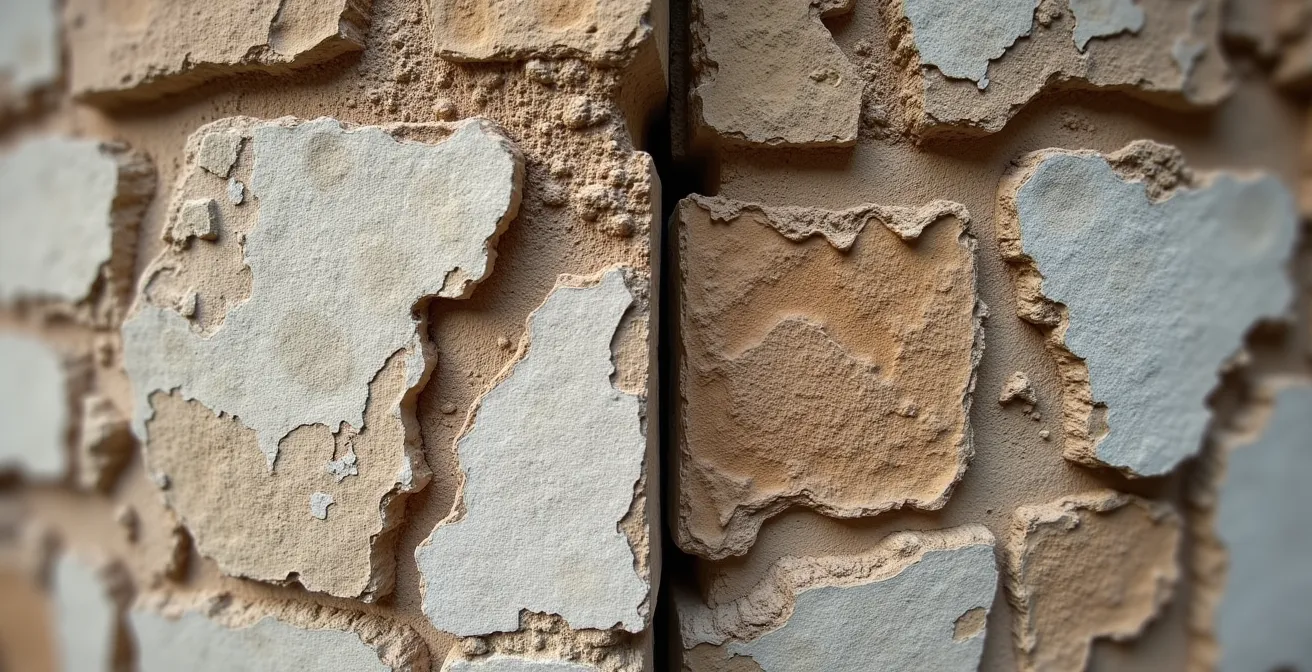
Industry benchmarks are stark: deferred maintenance costs compound by a staggering 7% per year. At this rate, a $1 million repair job today will cost over $1.4 million in just five years, and nearly $2 million in ten, not accounting for inflation. This exponential curve is driven by the fact that small failures cascade. Water intrusion damages plaster, which then allows moisture to reach structural timbers, which then promotes insect infestation and decay. Each stage is progressively more expensive to fix. The “wait and see” approach is, in financial terms, a guaranteed losing strategy.
This principle is not just a contractor’s warning; it is a recognized fiscal reality for asset managers. As the U.S. Department of the Interior noted in a key report on its own building portfolio, inaction has severe consequences.
The longer maintenance or repairs are deferred, assets may become unsafe or unusable, and repairs or replacements become more expensive.
– U.S. Department of the Interior, Deferred Maintenance and Repair Report
For policymakers, this means reframing the budget conversation. The question is not “Can we afford to fix it now?” but “Can we afford the doubled cost of fixing it in five or ten years?” Proactive maintenance and timely restoration are fiscally conservative actions that mitigate a rapidly growing liability on the community’s balance sheet.
Museum or Boutique Hotel: Which Save Strategy Fits Your Building?
Once the decision to invest is made, the next critical question is one of strategy. Saving a building is not enough; it must have a sustainable future. This is where adaptive reuse comes in—repurposing a historic structure for a new, economically viable function while preserving its architectural character. The choice between a public-facing cultural space, like a museum, and a private commercial enterprise, like a boutique hotel, is not a matter of ideology but of strategic fit. The right strategy turns a preservation project into a long-term, revenue-generating asset.
A purely public use, such as a community center or museum, can offer immense social benefits but often requires ongoing public subsidy. A commercial reuse, such as offices, apartments, or a hotel, can generate direct revenue and tax income, ensuring the building pays for its own upkeep and contributes to the local economy. Often, the most successful and resilient models are hybrids that combine public access with commercial activity—for instance, a historic courthouse that houses municipal archives on one floor and leasable office space on another.
Case Study: The Lisbon Transformation
Cities like Lisbon, Portugal, provide a powerful blueprint for how adaptive reuse can drive widespread economic growth. Facing economic stagnation, the city embraced the restoration of its historic building stock in neighborhoods like Alfama and Baixa. Instead of creating state-funded museums, many of these properties were transformed into boutique hotels, high-end tourist apartments, and vibrant cultural-commercial spaces. This strategy attracted significant private investment, created a boom in construction and hospitality jobs, and turned Lisbon into one of Europe’s top tourist destinations, all while preserving the city’s unique architectural soul.
Determining the best path forward requires a rigorous analysis of the building’s integrity, its location, and local market demand. A structured approach is essential to avoid costly mistakes and maximize the return on investment.
Your Action Plan: The Adaptive Reuse Decision Framework
- Assess Potential: Score the building’s heritage integrity against its commercial potential. Is its main value its history (favoring public use) or its location and structure (favoring commercial use)?
- Test the Market: Before committing to a full renovation, analyze local demand through temporary “pop-up” events. A weekend art exhibit or a one-month co-working trial can provide invaluable data on market interest.
- Evaluate Hybrid Models: Explore options that combine public access with revenue generation. Could a historic library host paid private events in the evenings? Could a portion of a public building be leased to a café?
- Calculate Sustainability: Develop a long-term financial model for each potential reuse option. Project revenue, operating costs, and maintenance needs over a 20-year horizon to determine true financial viability.
- Pilot Before Scaling: Test the chosen concept with a smaller, initial phase before committing to major capital investment. This minimizes risk and allows for adjustments based on real-world response.
Laser vs. Chemical Cleaning: Removing Grime Without Dissolving History
The financial viability of a restoration project also depends heavily on the operational choices made during the work itself. Technology selection is not merely a technical detail; it is a strategic decision that has a profound impact on a project’s cost, timeline, and long-term outcome. The choice between traditional methods, like chemical or abrasive cleaning, and modern techniques, like laser ablation, is a perfect example of this Technological Arbitrage—where choosing a more advanced, albeit sometimes higher-upfront-cost, method yields a superior long-term ROI.
Traditional methods for cleaning stone facades often come with significant drawbacks. Chemical solvents can be toxic, require costly disposal protocols, and can invisibly damage the stone’s delicate patina or even its structural integrity. Abrasive methods like sandblasting are difficult to control and can permanently erode historic details. These methods often require more frequent reapplication cycles, adding to the long-term maintenance burden.
Laser cleaning, by contrast, offers a level of precision and safety that older methods cannot match. It works by firing highly focused pulses of light that vaporize centuries of grime, pollution, and paint layer by layer, without ever touching the original stone surface. It uses no chemicals, creates no toxic waste, and is so gentle it can be used on fragile marble and ancient artifacts. This precision translates directly into cost savings. As CS Laser UK, a specialist in the field, notes: “Over time, this efficiency translates to cost savings, as projects can be completed faster with fewer resources.” The growing adoption of this technology is reflected in market trends, where the laser cleaning market is expected to reach $1.00 billion by 2030.
For a policymaker or project manager, the decision-making matrix is clear. The choice is between a low initial cost with high long-term risk and environmental impact, versus a higher initial investment that provides greater control, safety, and lower lifecycle costs.
| Method | Precision | Environmental Impact | Long-term Cost |
|---|---|---|---|
| Laser Cleaning | Layer-by-layer control | No chemicals, no waste | Lower maintenance cycles |
| Chemical Cleaning | Less selective | Toxic waste disposal required | More frequent reapplication |
| Abrasive Methods | Risk of surface damage | Dust and debris | Potential substrate damage |
How to Crowdfund a Restoration Project When Grants Fail
Perhaps the single greatest hurdle for any heritage project is securing funding. Traditional sources, such as government grants and large private donations, are increasingly competitive and often insufficient to cover the full scope of a major restoration. When these avenues fail, many promising projects stall indefinitely. However, a new generation of funding models, powered by technology and community engagement, is providing a powerful alternative: crowdfunding.
Instead of relying on a few large checks, crowdfunding allows a community to raise money from a large number of individuals who each contribute a small amount. This approach does more than just raise capital; it builds a broad base of community buy-in and creates a network of passionate advocates for the project. When hundreds or thousands of local citizens have a financial stake in a building’s future, it creates powerful political and social momentum that can unlock further support. These platforms turn passive supporters into active investors in their own local heritage.
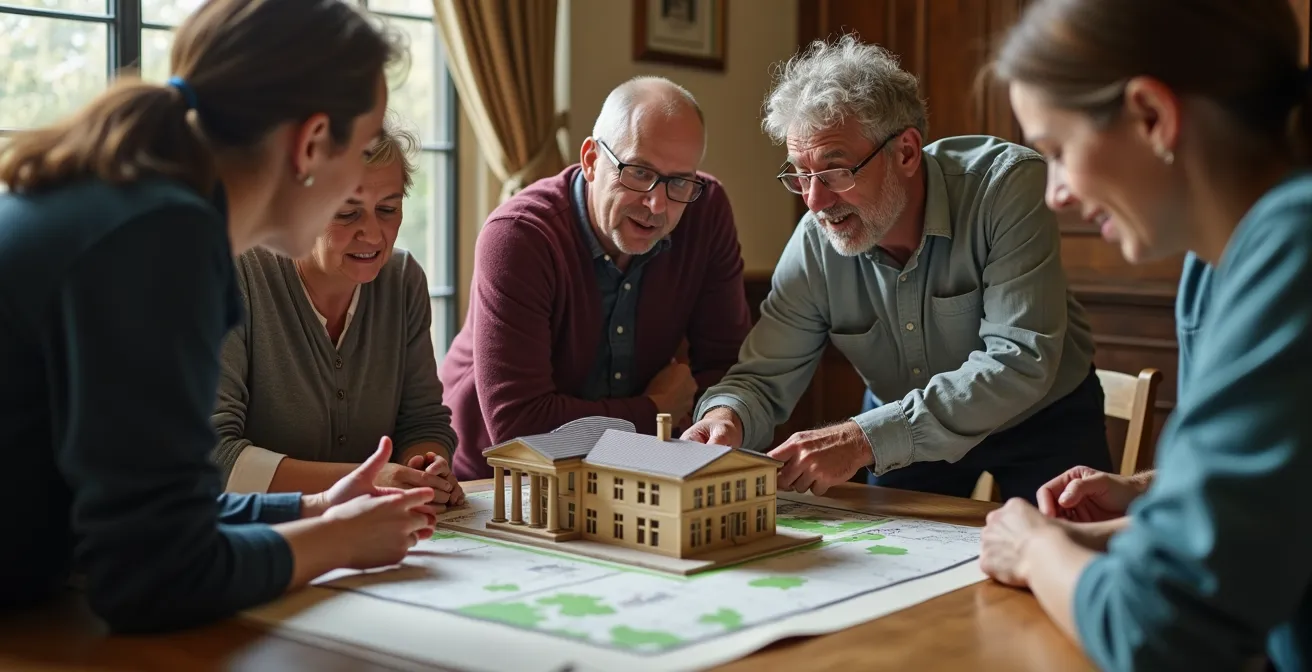
The most innovative models are now even leveraging blockchain technology to “tokenize” heritage assets, allowing people to buy, own, and trade fractional shares of a monument. This opens up entirely new possibilities for financing and public engagement.
Case Study: Tokenizing Selarón’s Steps in Brazil
Facing funding challenges for the preservation of the world-famous Escadaria Selarón (Selarón’s Steps) in Rio de Janeiro, project leaders are exploring a groundbreaking approach. As detailed in an analysis of new heritage funding models, the initiative would use blockchain to tokenize the monument. This would enable a form of fractional ownership for over 500 initial funders, creating a new way to finance preservation through a combination of crowdfunding and a secondary market on crypto platforms. The model, approved by the local government, could become a flagship for financing public monuments by deeply engaging the community as direct stakeholders.
For a policymaker, embracing these new models is a strategic imperative. It means moving beyond a passive reliance on grant applications and actively empowering the community to invest in its own assets. It diversifies the funding portfolio for heritage and transforms a financial challenge into an opportunity for profound community engagement.
Pricing the Hours: Can Traditional Craft Pay a Living Wage?
A successful restoration is not just about stone and mortar; it is about the skilled hands that perform the work. A critical component of the heritage economy is the ecosystem of master artisans and craftspeople—stonemasons, ornamental plasterers, stained-glass artists, and woodcarvers. A common misconception is that paying for these highly specialized skills makes restoration prohibitively expensive compared to modern construction. The reality is that investing in traditional craft is an investment in a sustainable, high-value economic sector that cannot be outsourced or automated.
Supporting a living wage for these artisans is not a cost center; it is a form of economic development. It preserves irreplaceable human capital and ensures that critical skills are passed down to the next generation. A community that fosters a strong craft-based economy becomes a center of excellence, attracting further restoration projects, high-net-worth clients, and even tourism centered on its unique skills. The key is for artisans to build business models that go beyond project-based work.
For artisans to command a living wage, they must diversify their income streams. This transforms them from hourly workers into multifaceted business owners. Key strategies include:
- Specialized Training: Offering high-end restoration workshops and masterclasses for other professionals and wealthy hobbyists.
- Digital Products: Creating and selling digital tutorials, online courses, and patterns based on traditional techniques.
- Consulting Services: Providing expert consulting for new-build projects that aim to incorporate traditional aesthetics and quality.
- Cooperative Ventures: Building cooperative models for sharing expensive tools, bulk-purchasing rare materials, or licensing proprietary techniques.
Successful platforms have emerged to support this ecosystem. As Artiom Ganin noted in an interview, the French crowdfunding platform Dartagnans “has managed to come to the rescue of hundreds of landmarks and change the way ordinary people… can be engaged into preserving the heritage.” By creating a reliable pipeline of funded projects, they enable craftspeople to build sustainable careers, proving that heritage can indeed pay a living wage.
Granite vs. Sandstone: Building for the Next Millennium
The ultimate expression of economic foresight in heritage is the understanding of material longevity. The choices made during a restoration—or during the original construction—have financial implications that echo for centuries. The debate over materials like granite versus sandstone is not just an aesthetic one; it is a profound statement about a project’s long-term ROI. Building for the next millennium requires a deep appreciation for the lifecycle cost of materials.
Granite, an igneous rock, is incredibly dense and resistant to weathering and pollution. It is difficult to carve and more expensive upfront, but its durability is legendary. Many ancient Egyptian and Roman structures built with granite stand strong today with minimal intervention. Sandstone, a sedimentary rock, is softer, easier to carve, and less expensive. However, it is more porous and susceptible to water damage, frost, and erosion, requiring more frequent maintenance and repair cycles over its lifespan.
Choosing a more durable, albeit more expensive, material upfront is the ultimate form of deferred maintenance prevention. It is an investment in reducing future costs. The logic is analogous to other building components. For instance, data shows that roofs receiving regular maintenance last 25-30 years, while neglected ones may fail in just 15-20 years. By selecting a fundamentally more durable roofing material from the start, one is essentially pre-paying for decades of reduced maintenance costs. The same principle applies, on a much grander timescale, to the foundational stone of a building.
When restoring a structure, the decision to replace a failing sandstone block with a more resilient granite or a treated limestone equivalent is a long-term financial decision. It may increase the project’s immediate budget, but it drastically reduces the future liabilities that will be passed on to the next generation. For a policymaker, advocating for the “better” material is advocating for long-term fiscal responsibility. It is a commitment to building assets, not future problems.
Key takeaways
- Heritage restoration is a quantifiable economic driver, not a sentimental cost.
- Inaction is more expensive than intervention due to the compounding costs of decay.
- Adaptive reuse and modern technologies maximize the ROI of preservation projects.
Why Every Government Building Looks Like a Greek Temple
The architectural language of our most important civic buildings—the columns, pediments, and domes of Neoclassicism—is no accident. This style, echoing ancient Greece and Rome, was deliberately chosen to project ideals of democracy, permanence, and stability. This symbolism is deeply intertwined with economics. These buildings are designed to look solid and timeless because they are intended to be the physical embodiment of a stable and trustworthy institution. They represent a form of Heritage Capital, an asset that pays dividends in public trust and perceived economic stability.
This concept extends to all significant historic buildings. They are more than just structures; they are powerful economic signals. A city that preserves and celebrates its historic core signals to the world that it is stable, confident, and invested in its own long-term future. This attracts investment, skilled talent, and tourism far more effectively than a landscape of disposable, short-lifespan buildings. The global economic impact is immense; UNESCO World Heritage Sites contribute billions of dollars annually to the global economy through tourism and related activities.
High-level policy bodies have formally recognized this economic power. They have moved beyond cultural arguments to frame heritage as a core component of a modern, sustainable economy. For them, heritage is not a relic of the past but a resource for the future.
In the European context, cultural heritage has been recognised as an advantage and an engine of growth… cultural heritage is considered as a production factor and an important resource for innovation, social inclusion and sustainability.
– European Commission, The Annals of Regional Science
Ultimately, investing in heritage restoration is an act of profound economic confidence. It leverages the capital of the past to build the prosperity of the future. It demonstrates a commitment not just to where a community has been, but to where it is going.
Therefore, the next time a historic building’s fate is on the agenda, reframe the debate. Move the discussion from cost to investment, from liability to asset, and from a sentimental choice to a strategic economic imperative. Evaluate the project based on its projected ROI and present a clear, data-driven case for how it will strengthen the community’s economic future.