Periods & Movements
Art movements are more than simple labels in a museum catalog. They represent pivotal moments when artists collectively challenged conventions, reimagined the purpose of visual expression, and fundamentally altered how we perceive the world around us. From the archaeological precision of Neoclassicism to the fragmented reality of Cubism, each period emerges from a complex interplay of technological innovation, political pressure, philosophical inquiry, and creative rebellion.
Understanding these movements means grasping not just aesthetic differences, but the underlying forces that propel artistic change. Why do certain styles dominate entire generations while others vanish within decades? How do political systems harness visual culture for legitimacy? What role does technology play in transforming both technique and perception? This exploration connects the theoretical frameworks that define movements with the practical realities artists faced—from the physical challenge of transporting wet canvases to the cognitive leap of representing multiple perspectives simultaneously.
What Defines an Art Movement and How Do They Form?
An art movement crystallizes when a group of artists shares not just stylistic similarities, but a common philosophical vision about what art should accomplish. Unlike isolated individual experimentation, movements gain momentum through collective articulation of principles, often formalized in written manifestos that serve as both declaration and recruitment tool.
The manifesto functions as a movement’s constitution—think of it as the artist’s equivalent of a political party platform. The Surrealists published their manifesto outlining psychic automatism and the liberation of the unconscious. Neoclassical theorists wrote treatises championing the supremacy of drawing over color and the moral duty of art. These documents didn’t merely describe existing practices; they actively shaped how artists approached their work and how critics evaluated it.
Movements also exhibit recognizable lifecycle patterns. They often emerge as reactionary responses—the pendulum swing of style. Neoclassicism rejected what it perceived as the frivolous excesses of Rococo decoration, embracing instead archaeological accuracy and rational order. This cyclical nature reveals that artistic change rarely follows linear progress; instead, it oscillates between opposing values, each generation finding previous aesthetics either insufficient or excessive.
Art and Power: The Political Machinery of Visual Culture
Art has always served as a sophisticated tool for political legitimacy and control. Royal portraiture, in particular, operated as myth-making machinery, transforming fallible humans into symbols of divine authority, military prowess, or enlightened governance. The portrait wasn’t simply representation—it was strategic communication designed to circulate an idealized image throughout territories where most subjects would never glimpse the actual monarch.
This political function required infrastructure. The centralization of artistic production in royal manufactories—state-controlled workshops where artisans produced everything from tapestries to furniture—ensured stylistic consistency and ideological alignment. Artists working within these systems weren’t independent creators but instruments of state messaging, their talents channeled toward glorifying the patron.
Even architecture functioned as political strategy. Versailles, for instance, served as more than a residence; it operated as an elaborate cage for the aristocracy, concentrating potential rivals under constant surveillance while bankrupting them through the financial cost of baroque splendor. The consequences of this expenditure would eventually contribute to revolutionary upheaval, demonstrating how artistic patronage systems contain the seeds of their own destruction.
The transition from private patron to state institution fundamentally altered this dynamic. As museums and academies became government entities rather than royal possessions, the relationship between artist and authority shifted, though power structures remained embedded in who received commissions, exhibitions, and official recognition.
The Acceleration of Artistic Change Since Industrialization
Artistic trends have accelerated dramatically since the mid-nineteenth century, with movements that once might have dominated for generations now rising and fading within decades or even years. This acceleration corresponds directly to broader technological and social transformations—improved transportation, mass media, urbanization, and eventually digital communication.
Several factors determine whether a movement achieves longevity or remains a historical footnote. Critical reception plays a crucial role: movements championed by influential critics, theorists, and institutions gain visibility and perceived legitimacy. The general public’s initial rejection of Cubism didn’t prevent its eventual canonization because key critics and collectors recognized its revolutionary significance.
Globalization has profoundly impacted regional movements. Styles that might once have remained geographically contained now circulate instantly through digital reproduction. This creates both homogenization—as local traditions adopt international aesthetics—and renewed emphasis on regional identity as artists consciously preserve distinctive approaches against global trends.
Defining when a movement ends proves surprisingly complex. Does it conclude when founding artists move on, when critical attention shifts, when the market cools, or when the next generation reacts against it? Often these endpoints blur, with movements experiencing multiple revivals and reinterpretations decades after their supposed conclusion.
Neoclassicism: Archaeological Precision and Moral Purpose
Neoclassicism emerged as a deliberate return to order, reason, and archaeological accuracy in response to perceived Rococo frivolity. The discovery of Pompeii created immediate and profound impact on European style—suddenly, artists and designers possessed concrete evidence of ancient Roman daily life rather than idealized reconstructions. This archaeological precision became both aesthetic goal and moral imperative.
The Neoclassical view assigned art a moral purpose: to elevate viewers through depictions of virtue, sacrifice, and civic duty drawn from classical history and mythology. Beauty alone was insufficient; art must instruct and inspire ethical behavior. This philosophical position justified art’s cultural importance during an era of Enlightenment rationalism.
Technically, Neoclassicism championed drawing—the dominance of line and contour—over the colorist approach of Baroque and Rococo painters. Clean outlines, sculptural modeling, and clearly defined forms reflected the movement’s emphasis on rational clarity over sensory indulgence. Yet this very commitment to historical accuracy created problems: how could painters authentically represent ancient subjects when so many details about clothing, settings, and customs remained uncertain or debated?
Impressionism: Capturing Light and the Sensory Revolution
Impressionism represented both a technological and sensory revolution centered on painting outdoors directly from nature. This seemingly simple shift required artists to solve numerous practical challenges while fundamentally reconceiving what painting could capture.
Technical Challenges of Plein Air Painting
The physical difficulty of transporting easels, paints, and wet canvases outdoors seems minor until you consider that artists were working before portable tube paints became widely available. Even with improved materials, painters faced the challenge of changing light conditions—shadows shift, clouds alter color temperature, and the “perfect moment” lasts perhaps thirty minutes before atmospheric conditions transform entirely.
Scientific Color Theory and Optical Innovation
Impressionists applied scientific theories of color separation, placing unmixed pigments side-by-side so viewers’ eyes would optically blend them. This technique created more luminous results than traditional mixing on the palette. Think of it like pixels on a screen—individual dots of color that resolve into coherent images only at proper viewing distance. The influence of Japanese prints on composition reinforced this approach, introducing flattened space, asymmetrical arrangements, and bold cropping that challenged Western perspective conventions.
Rejecting Academic Finish
Perhaps most controversially, Impressionists rejected the “finished” smooth surface prized by academic painting. Visible brushstrokes, sketchy application, and unblended colors initially appeared incomplete to audiences accustomed to highly polished canvases. This aesthetic choice prioritized immediate sensory impression over detailed description—capturing the feeling of a moment rather than cataloging its elements.
Cubism: The Cognitive Shift of Fragmented Vision
Cubism required viewers to make a profound cognitive shift: seeing multiple angles simultaneously within a single composition. Rather than the fixed viewpoint of traditional perspective, Cubist paintings present objects as if observed from several positions at once, fragmenting form to reveal multiple facets.
The difference between Analytical and Synthetic Cubism marks the movement’s evolution. Analytical Cubism (earlier phase) dissected subjects into geometric planes with muted, nearly monochromatic palettes. Synthetic Cubism (later phase) built compositions from simplified shapes in brighter colors, introducing collage and non-art materials—newspaper clippings, wallpaper, fabric—that questioned the boundary between fine art and everyday objects.
The influence of African masks on Picasso’s vision provided a crucial catalyst. These sculptures demonstrated how faces could be powerfully represented through geometric abstraction rather than naturalistic likeness. This wasn’t mere stylistic borrowing but recognition of alternative visual logics that European academic tradition had dismissed or ignored.
Cubists also engaged with the concept of the fourth dimension in painting—not literally depicting time, but suggesting movement through space by showing multiple views compressed onto the picture plane. The reception of Cubism by the general public was initially hostile; critics called it incomprehensible, even dangerous. Yet this very difficulty signaled its radical reimagining of representation itself.
Surrealism: Techniques for Accessing the Unconscious
Surrealism positioned the unconscious mind as primary source of creative imagery, deliberately circumventing rational control to access deeper psychological truths. This required developing specific techniques to unlock material normally suppressed by conscious thought.
The technique of psychic automatism in drawing—allowing the hand to move without conscious direction, like spontaneous writing—aimed to bypass intellectual censorship. Similarly, the juxtaposition of unrelated objects to create unexpected sparks (an iron and a lobster, a fur-covered teacup) generated what Surrealists called “convulsive beauty”—imagery that shocked viewers into new awareness by violating logical expectations.
The Surrealist group maintained strong political alignment, viewing liberation of the unconscious as inseparable from social revolution. However, this progressive stance coexisted with problematic gender dynamics: women were frequently positioned as the “Muse”—passive inspiration for male creativity—rather than recognized as artists with their own vision, though several female Surrealists challenged this limitation.
Dalí’s paranoiac-critical method represented a more systematic approach: deliberately inducing paranoid states to perceive multiple images within single forms, then critically rendering these visions with technical precision. This combination of irrational perception and rational execution created Surrealism’s characteristic tension between dreamlike content and hyperrealistic technique.
Contemporary Innovation: Merging Traditional Craft With Digital Technology
Current artistic practice increasingly explores hybrid approaches that unite ancient craft traditions with cutting-edge technology, creating work that honors material history while embracing contemporary capabilities.
Laser cutting enables intricate marquetry patterns that would require months of hand-cutting, making complex geometric designs feasible at scales previously impossible. Digital weaving looms translate algorithmic patterns into textile, allowing artists to program elaborate designs that physical hand-weaving couldn’t easily achieve. These technologies don’t replace craft knowledge—they require deep understanding of materials and techniques—but expand creative possibilities.
Using sustainable materials in traditional processes addresses environmental concerns while maintaining cultural continuity. Artists working with natural dyes, reclaimed wood, or biodegradable components demonstrate that innovation need not mean abandoning ecological responsibility. AI-generated patterns for ceramic glazing represent perhaps the most provocative fusion: machine learning algorithms create designs applied through centuries-old firing techniques.
The aesthetic of the “glitch” in physical craft deliberately incorporates errors, accidents, and digital artifacts into handmade objects. This embrace of imperfection challenges both digital perfectionism and craft’s traditional emphasis on flawless execution, creating a contemporary visual language that acknowledges technology’s presence while asserting materiality’s irreducible value.
Understanding periods and movements provides essential context for appreciating how artistic vision evolves through dialogue between tradition and innovation, individual creativity and collective momentum. Each movement we’ve explored responded to specific historical conditions while contributing lasting insights about representation, perception, and meaning—insights that continue shaping contemporary practice across media and methodologies.
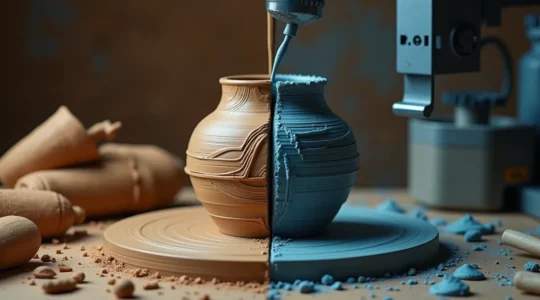
3D Printing Clay: Is It Cheating or Evolution?
The fierce debate about 3D printing clay misses the point entirely; it’s not about the artist’s hand versus the machine, but a misunderstanding of how craft has always consumed and redefined itself through technology. Technology, from the 19th-century Jacquard loom…
Read more
How Freud’s Theories Became Melting Clocks and Burning Giraffes: A Psychoanalytic Reading
Surrealist art is not a collection of random dream images, but the direct visual output of artists using Freudian psychoanalysis as a practical creative toolkit. Artists systematically employed techniques like automatism and the paranoiac-critical method to bypass the rational mind…
Read more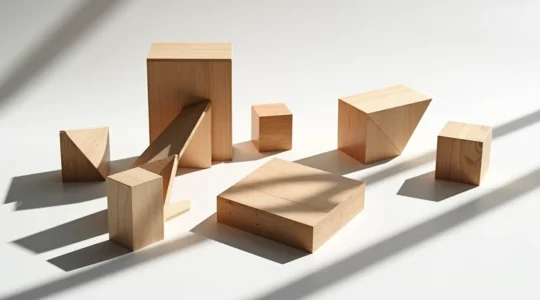
Why Cubism Was the Most Radical Break in 500 Years of Art
Cubism’s revolution wasn’t just aesthetic; it was cognitive, fundamentally changing the relationship between the artwork and the viewer’s mind. It replaced the passive act of seeing a single moment with the active mental process of assembling multiple moments and viewpoints….
Read more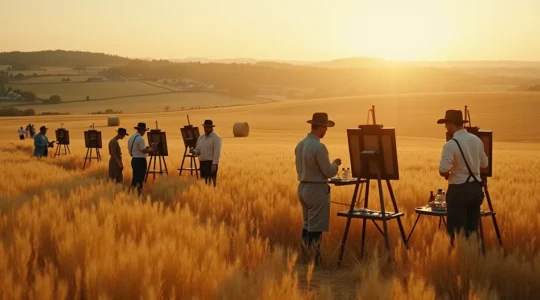
How the Invention of the Paint Tube Created Impressionism
The “look” of Impressionism was not just an artistic choice, but a direct consequence of the technology that enabled it: the collapsible paint tube. Working outdoors forced artists to paint faster to capture fleeting light, resulting in visible, rapid brushstrokes….
Read more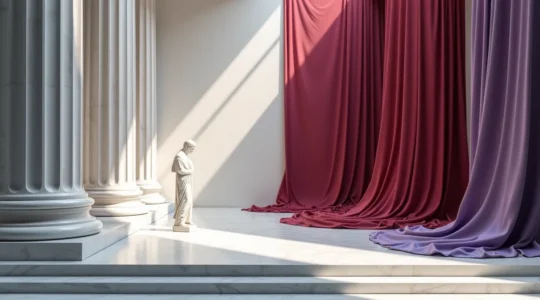
Why Neoclassicism Hated Emotion and Adored Geometry
Neoclassical art is often perceived as cold and unemotional, a sterile rejection of feeling. The truth, however, is more profound. This wasn’t an absence of passion but a deliberate philosophical choice to replace the chaos of private sentiment with the…
Read more
Why Art Movements Got Shorter and Faster After 1900
Many believe the rapid succession of art movements after 1900 was simply a reaction to technology and war. The truth is more complex. The acceleration was driven by a new internal logic within art itself: a self-perpetuating cycle where intellectual…
Read more
How Louis XIV Used Art to Bankrupt and Control the Nobility
Louis XIV’s legendary art collection was not a matter of taste; it was a calculated instrument of political warfare designed for the sole purpose of subjugating the French aristocracy. He monopolized luxury production and artistic commissions to control the national…
Read more