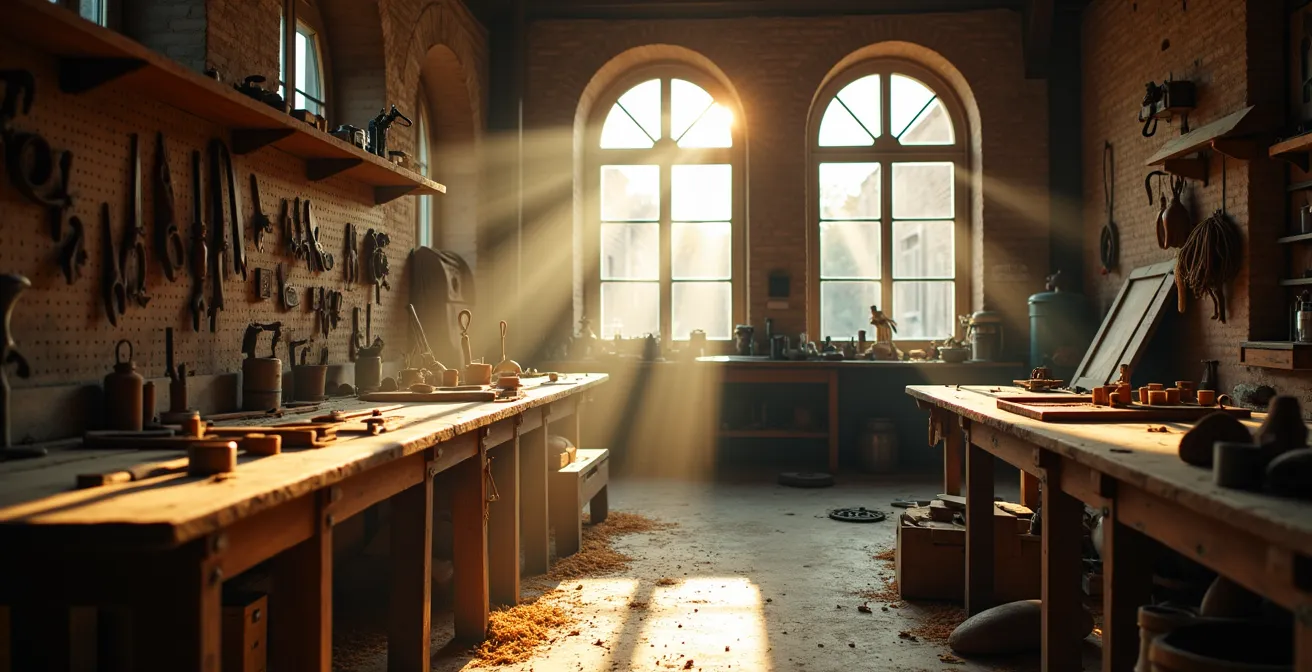
Historic workshops are not just surviving; they are strategically transforming their business models to lead in the luxury economy by monetizing their expertise.
- They are pivoting from being product-makers to becoming indispensable B2B knowledge suppliers for other industries.
- They are monetizing their heritage through high-margin experiences and training, moving beyond simple storytelling.
Recommendation: To succeed, artisans and brands must view craft expertise not as a production method, but as a core, monetizable intellectual asset ready for strategic deployment.
In an era dominated by automation and instantaneous global supply chains, the image of a master artisan toiling in a historic workshop can seem like a relic from a bygone century. The common assumption is that these bastions of traditional craftsmanship are fighting a losing battle against mass production, surviving only by catering to a shrinking pool of ultra-wealthy connoisseurs. The narrative often focuses on familiar themes: an unwavering commitment to quality, a deep connection to heritage, and the power of a brand story steeped in history.
While these elements are undeniably important, they are merely the surface of a much more complex and dynamic economic reality. Focusing only on the romanticism of the craft misses the crucial strategic shifts that allow these workshops not just to survive, but to thrive. The critical question for any business student or modern artisan is not *if* they can survive, but *how* they are building resilient, forward-looking business models. What if the true key to their longevity is not in resisting the modern economy, but in strategically integrating with it in unexpected ways?
This analysis moves beyond the platitudes of “quality over quantity.” We will deconstruct the economic engines of these historic houses, revealing that their most valuable product is no longer a handbag or a tapestry, but their proprietary knowledge itself. From managing recruitment crises to monetizing factory tours and leveraging state ownership, we will explore the sophisticated strategies that define the future of luxury craft.
This article dissects the core business strategies that enable heritage workshops to maintain their relevance and profitability in the 21st century. The following sections provide an in-depth look at the challenges they face and the innovative solutions they are implementing.
Summary: The New Economics of Artisan Survival
- Who Will Replace the Masters? The Recruitment Crisis in Luxury Crafts
- Handmade vs. Hand-Finished: Where Do Brands Draw the Line?
- Supplier to the King: Does the Royal Warrant Still Drive Sales?
- From Saddles to Handbags: How Leather Workshops Pivot to Survive
- Open Doors or Closed Secrets: Monetizing Factory Tours
- Gobelins and Sèvres: When the State Owns the Means of Luxury
- When Books Left the Monastery: The Rise of Secular Guilds
- How to Distinguish a Real Aubusson from a Machine-Made Copy?
Who Will Replace the Masters? The Recruitment Crisis in Luxury Crafts
The single greatest threat to the continuity of historic workshops is not economic but demographic. A significant generational gap looms over the luxury craft sector, creating a critical succession problem. The core expertise resides in a workforce that is rapidly approaching retirement, with too few young artisans ready to take their place. This isn’t just a skills shortage; it’s a potential extinction event for centuries-old techniques. According to luxury goods forecasts, the industry will need to recruit an estimated 276,000 new artisans by 2028 to meet demand and replace retiring masters.
This challenge stems from a societal shift away from manual trades and a lack of clear, prestigious career paths in the crafts. The long apprenticeship periods and the perception of lower earning potential compared to white-collar jobs deter new entrants. As one expert notes, the risk is the permanent loss of invaluable knowledge.
The work force is — primarily are in their late 40s, 50s and 60s. And so there’s been a tremendous gap between individuals that are in this aging work force and the new individuals that are coming up… And if we continue to see that work force age out, we are not going to capture that generational knowledge.
– Gigi Burris O’Hara, PBS News Hour
In response, major luxury conglomerates are treating recruitment as a strategic imperative, not an HR function. LVMH, for instance, is aggressively expanding its flagship apprenticeship program, “Les Journées Particulières,” committing to training and recruiting 2,400 artisans. Crucially, it’s expanding these programs from their historical European base into new markets like the United States, proactively building a global talent pipeline. This represents a fundamental shift from passively waiting for talent to actively investing in its creation, turning human capital development into a competitive advantage.
Handmade vs. Hand-Finished: Where Do Brands Draw the Line?
The term “handmade” is a cornerstone of luxury marketing, yet its definition is increasingly fluid. In a world where technology can produce flawless results, brands face a strategic choice: where does the hand of the artisan add the most value, and where can machinery be used to enhance efficiency without diluting the brand’s promise? This is not a question of authenticity versus fraud, but of strategic resource allocation. The answer often lies in distinguishing between “handmade” and “hand-finished.” A product’s core structure might be assembled with the aid of precision machines, but its soul—the final stitching, the burnishing of an edge, the setting of a clasp—is imparted by a skilled artisan.
This hybrid approach allows workshops to scale production to meet the demands of what is now a massive global market. The handmade and crafts sector is not a quaint cottage industry; it represents a global market valued at over $906 billion in 2024. To capture a share of this market, efficiency is paramount. The strategic decision is to automate the repetitive and predictable, while reserving human expertise for tasks that require judgment, nuance, and the “maker’s touch” that technology cannot replicate.
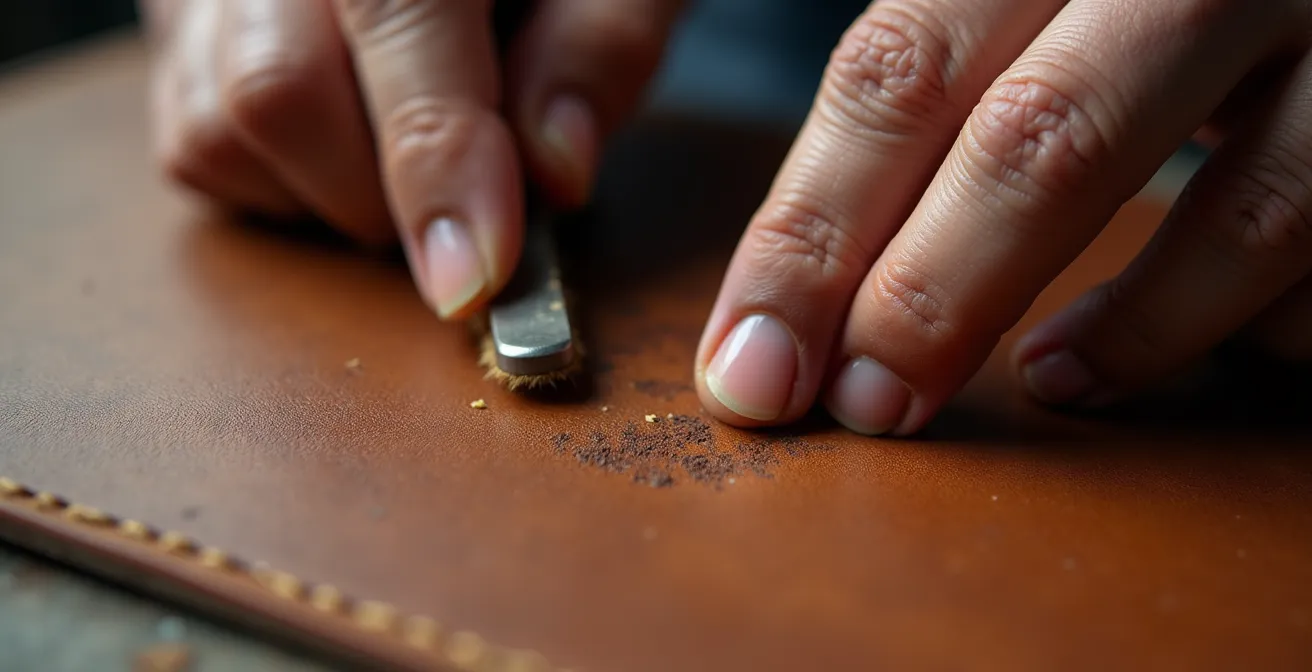
The close-up of an artisan’s hands performing the final, detailed work on a luxury item embodies this principle. This is the moment where value is most visibly created, justifying a premium price point. The line is drawn where the machine’s contribution ends and the artisan’s signature begins. For luxury strategists, the goal is to optimize this balance, ensuring that human intervention is always the most valuable component of the final product, both in reality and in the perception of the consumer.
Supplier to the King: Does the Royal Warrant Still Drive Sales?
A Royal Warrant, the official mark of an appointment to supply goods or services to the royal court, has long been considered one of the most powerful endorsements a brand can receive. It serves as an unimpeachable signal of quality, tradition, and prestige. Historically, this seal of approval was a direct driver of sales, opening doors to an elite clientele and conferring a competitive advantage that was nearly impossible to replicate. However, in a globalized, digitally-driven market, is its commercial influence as potent as it once was? The answer is shifting from direct sales impact to a more nuanced role in brand narrative and strategic positioning.
Today, the value of a Royal Warrant is less about convincing a customer to make a single purchase and more about reinforcing the long-term legitimacy and heritage of the brand. It becomes a foundational element of storytelling, a proof point in a world saturated with fleeting trends. The association is no longer just a passive badge of honor; it’s being actively leveraged as a platform for new initiatives. This is a strategic pivot from leveraging a title to monetizing the expertise it represents.
Case Study: The King’s Foundation at Highgrove
A prime example of this evolution is seen with Highgrove Traditional Crafts. Rather than simply using its royal connection to sell products, The King’s Foundation has established a dedicated center on the Highgrove estate focused on preserving and teaching heritage craft skills. According to their official site, it offers training programmes, short courses, and masterclasses delivered by experts. This initiative transforms the passive prestige of royal patronage into an active, educational, and revenue-generating enterprise. It secures the future of the crafts themselves while reinforcing the brand’s commitment to excellence, creating a powerful, self-sustaining ecosystem of value.
The modern power of a Royal Warrant, therefore, lies not in its ability to directly drive sales transactions, but in its capacity to provide a platform for monetizing expertise and reinforcing authenticity. It has become a strategic asset for building brand equity and engaging in the experience economy, proving its continued relevance in the 21st century.
From Saddles to Handbags: How Leather Workshops Pivot to Survive
The most resilient historic workshops are not those that rigidly adhere to their original product lines, but those that understand their core competency is not the product itself, but the mastery of a material. A saddlery, for example, is not just in the business of making saddles; it is in the business of understanding leather. This re-framing of identity is the key to strategic pivoting. The ability to transfer deep material knowledge from a declining market (e.g., equestrian equipment) to a growing one (e.g., luxury handbags, automotive interiors, watch straps) is the single most important survival skill.
This pivot can take two primary forms. The first is vertical integration by luxury giants, who acquire smaller, specialized workshops to secure their supply chain and absorb proprietary knowledge. Chanel’s “Métiers d’Art” initiative is a masterclass in this strategy, acquiring and sustaining independent specialists like the Scottish cashmere manufacturer Barrie and the embroiderers Lesage. This guarantees Chanel exclusive access to the highest level of craftsmanship while providing the workshops with financial stability and a secure future. It’s a symbiotic relationship where knowledge is consolidated to build a competitive moat.
The second form is diversification, where independent workshops leverage their expertise to become B2B suppliers to multiple industries. A workshop that once made bespoke shoes can pivot to creating high-end leather components for private jets or luxury car brands. The following table illustrates this strategic shift from a traditional, product-focused model to a modern, knowledge-focused one.
| Traditional Model | Modern Pivot Strategy | Key Advantage |
|---|---|---|
| Single product focus | Material expertise diversification | Selling knowledge to multiple brands |
| B2C finished goods | B2B luxury components | Stable contracts with automotive/watch industries |
| Product sales only | Experience economy integration | High-margin masterclasses and workshops |
This strategic pivot transforms a workshop from a simple manufacturer into a diversified portfolio of expertise, creating multiple revenue streams and insulating it from the volatility of a single consumer market. It is the ultimate expression of monetizing knowledge.
Open Doors or Closed Secrets: Monetizing Factory Tours
For decades, the inner workings of luxury workshops were shrouded in secrecy, a deliberate strategy to cultivate an aura of mystique and protect proprietary techniques. Today, that fortress-like mentality is giving way to a more open approach, driven by the realization that transparency itself can be a powerful marketing tool and a significant revenue stream. The “factory tour” has evolved from a simple behind-the-scenes glimpse into a sophisticated, multi-tiered element of the experience economy.
The strategic insight is that different audiences have different levels of interest and willingness to pay. A casual tourist may be happy with a free virtual tour, while a dedicated brand enthusiast will pay for a physical visit. A high-net-worth client expects a private, personalized experience, and a B2B professional from another industry may pay a premium for an “inspiration workshop” that provides deep insights into process and innovation. This tiered approach allows a workshop to engage a broad audience at the top of the funnel while identifying and monetizing high-value leads at the bottom.
Instead of giving away the “secrets,” workshops are now packaging and selling access to them. This strategy does more than just generate revenue; it builds a deeper, more emotional connection with the consumer, transforming them from passive buyers into active brand participants. The workshop becomes a destination, a place of learning and inspiration. The following plan outlines a concrete strategy for implementing such a system.
Action Plan: Implementing a Tiered Workshop Experience Strategy
- Level 1 (Mass Engagement): Develop free virtual tours and high-quality digital content to build brand awareness and capture top-of-funnel interest.
- Level 2 (Enthusiast Access): Create paid physical tours offering a structured, behind-the-scenes look at the craftsmanship process for the general public.
- Level 3 (VIP Clienteling): Design exclusive, by-invitation-only tours for top clients, including personalized experiences, meetings with artisans, and bespoke gifts.
- Level 4 (B2B Knowledge Transfer): Launch high-ticket “Inspiration Workshops” for corporate teams and professionals seeking creative solutions and process insights.
- Level 5 (Data Integration): Implement a data collection system across all tiers to track engagement, identify potential commission clients, and nurture B2B leads.
By treating access as a product, workshops can create a powerful new business line that complements their physical goods, turning their operational floor into a profit center and a powerful tool for customer relationship building.
Gobelins and Sèvres: When the State Owns the Means of Luxury
A unique survival model exists for a handful of elite workshops: state ownership. Institutions like the Manufacture des Gobelins (tapestries) and the Manufacture de Sèvres (porcelain) in France are not private enterprises but are part of the national heritage, operating under the Ministry of Culture. This model fundamentally alters the economic equation. The primary objective is not profit maximization, but the preservation and perpetuation of a national cultural asset. This frees them from the short-term commercial pressures faced by private companies, allowing them to undertake projects of monumental scale and technical complexity that would be commercially unviable.
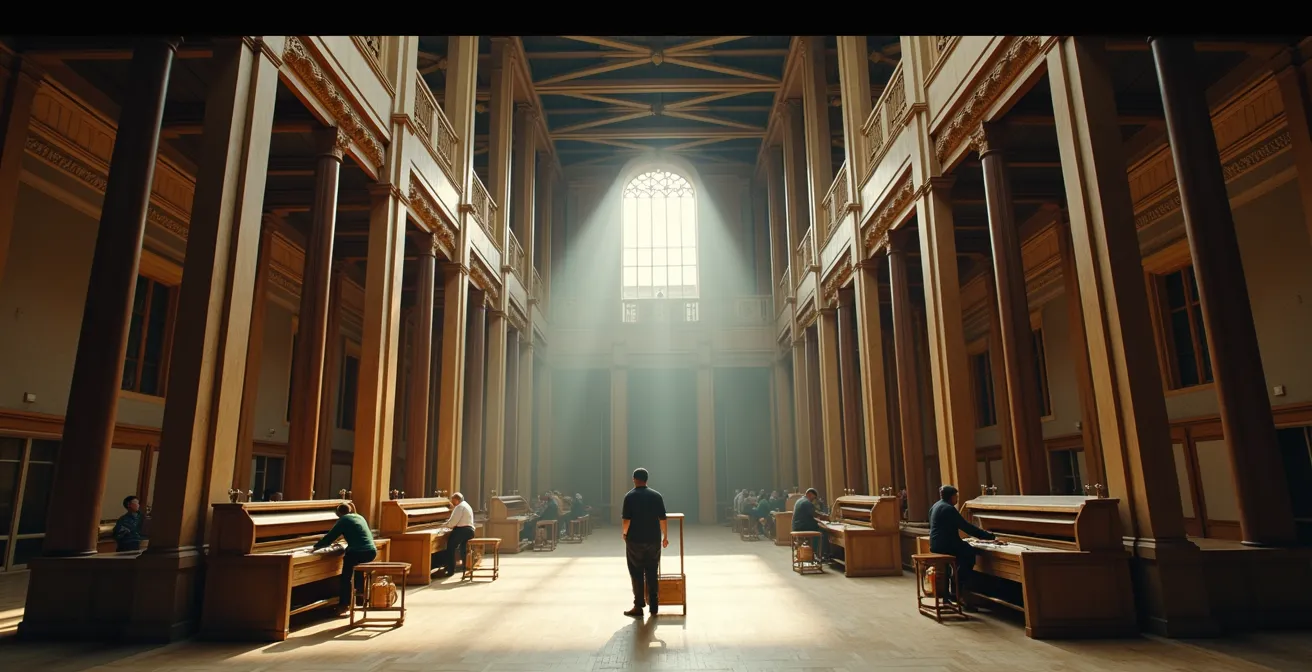
The advantage of this model is unparalleled stability. These institutions can afford to invest in decades-long training for their artisans and maintain techniques that might otherwise have vanished. They function as living museums and laboratories for high craft, serving as the ultimate benchmark for quality. Their role is not to compete in the open market but to define the pinnacle of their art form, acting as a cultural lighthouse that elevates the entire sector. The artisans in these workshops are not just employees; they are custodians of a legacy, embodying a philosophy of absolute mastery.
The essence of Takumi is to gain a sublime understanding of the nuances of a particular art. To be focused and spend countless hours on one thing, and to carry on. It requires one to empty the mind and focus in a way that is simply not possible when still acquiring a skill.
– Nahoko Kojima, Takumi Documentary
However, this model is not without its challenges. It can lead to a lack of commercial agility and a dependency on state funding. The strategic imperative for these institutions is to balance their cultural mission with the need for relevance, often by collaborating with contemporary artists and designers. They survive not by chasing trends, but by remaining the timeless standard against which all others are measured, a powerful example of value derived from cultural preservation rather than commercial competition.
When Books Left the Monastery: The Rise of Secular Guilds
The historic model for preserving craft knowledge and regulating quality was the guild. These associations of artisans controlled training (through apprenticeships), set standards, and provided a collective social and economic safety net. While the formal guilds of the medieval era have largely disappeared, their core functions are being reborn in modern, often digital, forms. This represents a strategic shift from centralized, geographically-bound organizations to decentralized, globally-connected networks that serve as 21st-century neo-guilds.
These new platforms address the fundamental challenges faced by independent artisans: access to market, logistics, and payment processing. They provide the infrastructure that allows a small workshop in a remote location to compete on a global stage. Charitable organizations also fill this role. For example, Heritage Crafts UK has distributed 66 grants through its Endangered Crafts Fund to support at-risk skills, acting as a financial backstop for the community. This collective support is crucial for individual survival.
The most powerful iterations of the neo-guild are digital B2B platforms that connect artisans directly with retailers, effectively cutting out layers of intermediaries. They democratize access to the luxury supply chain.
Case Study: Craftmerce, the Digital Guild for African Artisans
Craftmerce is a prime example of a modern guild in action. As detailed by a project on MIT’s Solve platform, the network includes over 3,000 artisan groups from 13 African countries. It connects them with a global network of 4,500 retailers and provides integrated solutions for payment and logistics through partnerships with Sezzle and DHL. This platform empowers artisans by handling the complex business operations, allowing them to focus on their craft. It is a powerful model for collective economic empowerment, proving that the guild concept is more relevant than ever.
By pooling resources and leveraging technology, these neo-guilds provide the scale and reach that individual artisans could never achieve alone. They are a critical piece of the modern craft ecosystem, ensuring that collective action remains a viable strategy for economic survival and growth, just as it was centuries ago.
Key Takeaways
- From Product to Knowledge: The most successful workshops now treat their proprietary techniques and material mastery as their primary, monetizable asset.
- Diversified Revenue Models: Survival depends on moving beyond B2C product sales to embrace B2B component supply, high-margin experiences, and training.
- Strategic Openness: Transparency is the new mystique. Monetizing access through tiered workshop experiences builds deeper customer relationships and creates new profit centers.
How to Distinguish a Real Aubusson from a Machine-Made Copy?
Ultimately, all of these business strategies are predicated on a single, fundamental premise: that there is a tangible, discernible difference in a product made with true artisanal expertise versus one made by a machine. This final point transcends business models and speaks to the intrinsic value of the craft itself. Distinguishing a real handwoven Aubusson tapestry from a machine-made copy is not just an exercise for connoisseurs; it is a validation of the entire economic ecosystem. The difference lies not only in the visible details—the slight irregularities, the texture, the depth of color—but in the embodied knowledge of the artisan.
A machine can follow a program, but it cannot exercise judgment. It cannot react to the unique character of the material in its “hands.” It cannot imbue an object with what artisans describe as a “soul.” This is not a romantic notion but a tangible quality that results from a process of deep engagement, where the mind, body, and senses of the maker are fully intertwined with the creation of the object. This holistic approach is what separates true craftsmanship from mere production.
To achieve real mastery, artisans must use the mind and the body, with their full sensory apparatus. Work of this kind intertwines an artisan’s physical knowledge and intellectual knowledge, and that leads to tangible accomplishments that can be more fulfilling than desk work, no matter how many fancy digital tools are employed.
– Trevor Marchand, The Future Is Handmade Documentary
The ability to perceive this difference is the foundation upon which the premium price of luxury craft is built. It is why brands invest in training, why they acquire workshops, and why consumers are willing to pay for authenticity. The survival of historic workshops therefore depends not only on their business acumen but also on educating the consumer to see and value this distinction. The future of craft rests on the belief that human intention and mastery leave an indelible, and valuable, mark.
For the business student and the modern artisan, the lesson is clear. The path forward is not to fear mass production, but to embrace the strategies that position craft as an inimitable source of value. To secure the future of your craft, the next logical step is to analyze your own expertise not as a skill, but as a portfolio of assets ready for strategic deployment in the modern economy.