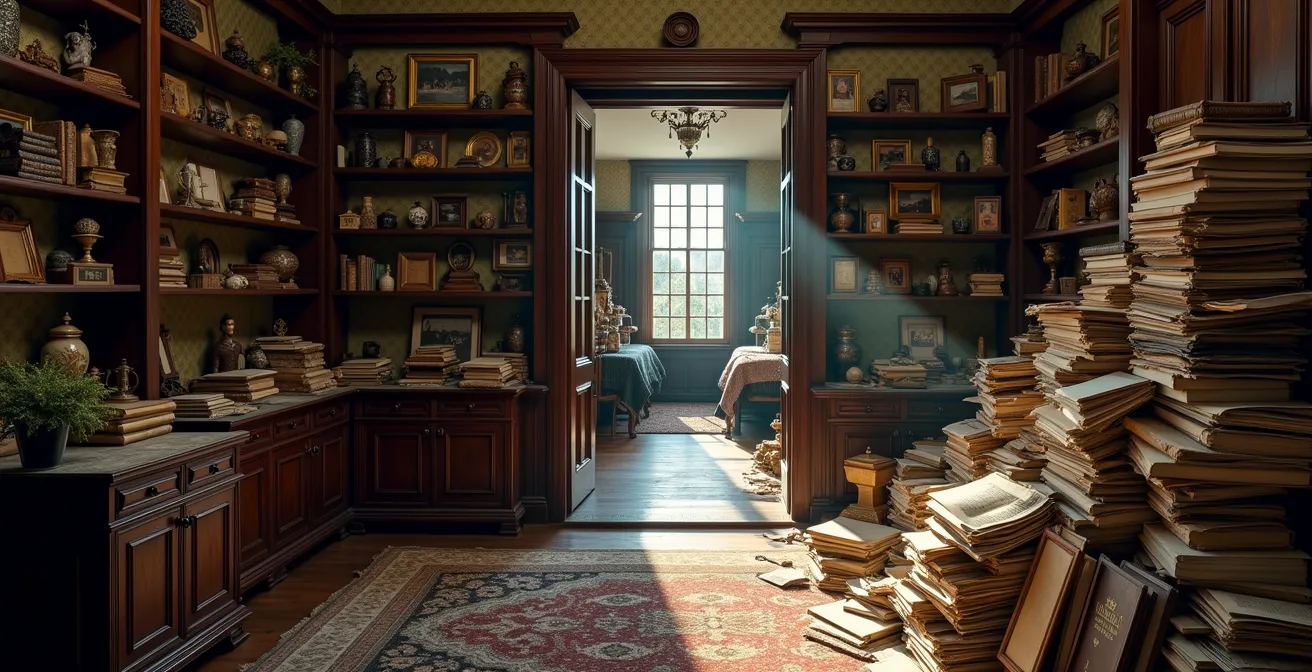
Contrary to popular belief, the difference between a collector and a hoarder isn’t the quantity of items, but the owner’s relationship with them—specifically, the presence of a clear narrative and intentional rituals.
- Overwhelming clutter often stems from “Guilt Keepers”—objects retained out of obligation, not love, which lack a positive personal story.
- Transforming possessions into a collection involves “Curatorial Rituals” like systematic cleaning, organization, and cataloging, which impose order and assign meaning.
Recommendation: Instead of focusing on getting rid of things, start by defining the story behind each object. This psychological shift is the first step toward regaining control and turning chaos into a curated collection.
That heavy, ornate vase you inherited sits on a shelf, collecting dust. You don’t like it, it doesn’t fit your style, but the thought of parting with it fills you with a vague, persistent guilt. This feeling is the quiet battleground where cherished collections can devolve into overwhelming clutter. Many believe the distinction is simple: collectors are organized, and hoarders are messy. This view suggests that the solution is merely a matter of better shelving or a more aggressive decluttering weekend.
However, this surface-level analysis misses the psychological core of the issue. The problem isn’t just about physical space; it’s about emotional and mental real estate. What if the true dividing line isn’t about the objects at all, but about the narrative we build around them? The key to transforming a source of stress into a source of joy lies not in what you keep, but in how you relate to it. It requires moving beyond simple organization to engage in meaningful “Curatorial Rituals”—the very practices that define a true collection.
This article will guide you through that mental shift. We will explore the psychology behind why we keep things we don’t love, provide practical systems for managing and caring for your items, and help you build a new, empowering narrative around your possessions. By focusing on meaning and intention, you can regain control and find delight, not dread, in the objects that surround you.
To navigate this complex emotional and organizational landscape, this guide is structured to address the core challenges you face. From the psychological weight of inherited items to the practical steps of cataloging and insurance, each section provides a clear path toward transforming your space and mindset.
Summary: A Guide to Curation and Clarity
- Guilt Keepers: Why We Keep Ugly Vases from Deceased Relatives
- The Dust Nightmare: Tools for Cleaning Fragile Figurines
- Grouping by Color or Era: Strategies to Calm Visual Chaos
- The Spreadsheet: How to Catalog 500 Small Objects Efficiently
- Will Your Figurines Ever Be Cool Again? Tracking Decor Trends
- The Appraisal Gap: Why Your Home Insurance Won’t Cover Your Antiques
- When Does an Avant-Garde Become Kitsch?
- Why That Flower Pattern Might Be a Political Statement?
Guilt Keepers: Why We Keep Ugly Vases from Deceased Relatives
The first step in untangling clutter is to acknowledge its emotional roots. Often, the most difficult items to manage are “Guilt Keepers”—objects kept not for their beauty or utility, but out of a sense of obligation to the person who gave them to us. This phenomenon blurs the line between a meaningful keepsake and psychological baggage. While true hoarding disorder is a clinical condition that research shows affects approximately 2.5% of the population, the emotional attachment to objects is a universal human experience.
The core issue is a confusion of love for a person with love for their things. That vase from a deceased relative becomes a physical proxy for your memory of them. Discarding it can feel like a betrayal of that memory. As psychologist Dr. Shirley M. Mueller notes, this is a common psychological trap. In a discussion on the topic, she explains the mechanism behind this attachment:
We often form strong emotional attachments to possessions, imbuing them with sentimental value that prevents disposal.
– Dr. Shirley M. Mueller, Psychology Today
To break free, you must create a new Object-Narrative. Ask yourself: does this object bring me joy, or does it trigger guilt? The goal is to separate the memory, which you can honor in other ways (a photograph, a written story), from the physical item that is causing you stress. Releasing a Guilt Keeper is not about forgetting a loved one; it’s about reclaiming your living space and emotional energy from an object that no longer serves a positive purpose.
The Dust Nightmare: Tools for Cleaning Fragile Figurines
Once you’ve addressed the emotional landscape, the next step is practical engagement. A key differentiator between a pile of stuff and a collection is care. The act of cleaning is not a chore; it is a Curatorial Ritual that reinforces your connection to the items and asserts your role as their caretaker. For fragile objects like porcelain figurines, this requires more than a simple feather duster. It demands a thoughtful, almost surgical approach, similar to what museum conservators employ.
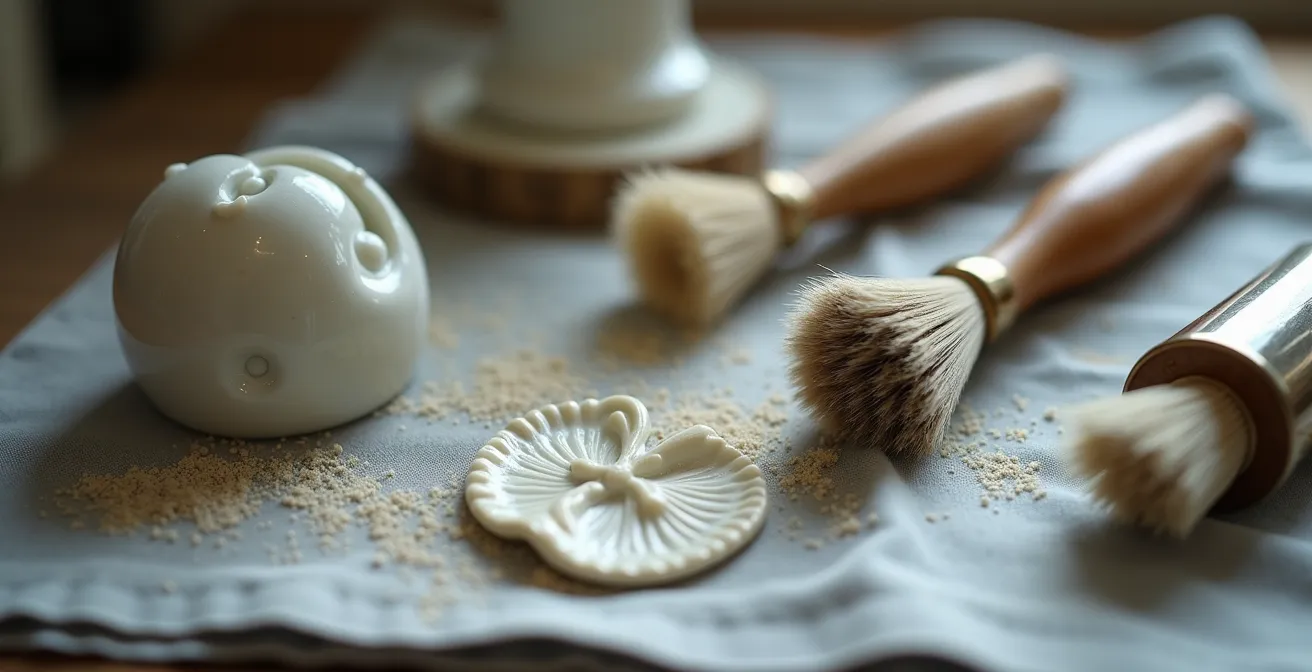
As seen in the image, professional tools like soft goat hair brushes, precision air blowers, and micro-vacuum attachments are designed for this delicate work. Investing in a few of these tools signals a mental shift: these are not just knick-knacks, but valuable assets worthy of specialized care. This ritual of careful cleaning transforms the objects from sources of dust and anxiety into a cherished display. It is an act of ownership and intention, the very opposite of the passive accumulation seen in hoarding.
However, with a large collection, cleaning can feel overwhelming. The key is not to clean everything at once, but to establish a sustainable system based on an object’s specific needs and vulnerability.
Your Conservation Triage Checklist: Prioritizing Care
- Categorize objects by fragility: Identify items at high, medium, and low risk of damage during handling and cleaning.
- Assess environmental exposure: Inventory which pieces are most exposed to dust, sunlight, or humidity.
- Create a rotating schedule: Based on priority, create a realistic cleaning rota (e.g., high-priority items monthly, low-priority annually).
- Document care requirements: Note specific cleaning methods and materials required for each category of object to avoid damage.
- Establish safe handling protocols: Define a clear process for moving and cleaning your most delicate items, minimizing risk.
Grouping by Color or Era: Strategies to Calm Visual Chaos
A collection can be technically organized but still feel chaotic. Rows upon rows of disparate objects create visual noise, overwhelming the eye and causing low-grade psychological stress. The solution lies in strategic presentation. Grouping objects by a unifying theme—such as color, material, or historical era—is a powerful curatorial strategy. It transforms a jumble of individual items into a cohesive, intentional display. This act of thoughtful arrangement is a hallmark of a collector.
This deliberate behavior is a key distinction from hoarding. As researcher Ashley Keller points out, the difference lies in the intentionality of the organization. Her work highlights how collectors create order:
Collectors engage in ritualistic behavior around organizing their items, whereas with our hoarders we see a much more indiscriminate acquisition process.
– Ashley Keller, King’s College London Research
This “ritualistic behavior” is what calms the Visual Chaos. Grouping all your blue pottery together on one shelf, for instance, creates a single, impactful visual statement instead of a dozen scattered points of distraction. This method allows the eye to rest and appreciate the collection as a whole, rather than being overwhelmed by its individual parts. It’s a way of telling a story with your objects, creating chapters and themes that make the collection understandable and enjoyable.
Case Study: Differentiation Through Organization Patterns
A landmark 2013 London study compared 29 individuals with Hoarding Disorder to 20 self-identified collectors. The research found a critical difference in spatial organization. Collectors typically arranged their items in specific, dedicated spaces like display cases or shelves, ensuring the collection was contained and presented to enhance its value. In stark contrast, hoarding led to clutter spreading across living areas, impeding the home’s functionality. The lack of structured organization emerged as the core feature separating a functional collection from debilitating clutter.
The Spreadsheet: How to Catalog 500 Small Objects Efficiently
For the overwhelmed owner of a large collection, the idea of cataloging can seem like an impossible task. Yet, it is the single most powerful Curatorial Ritual for asserting intellectual control over your possessions. A catalog transforms an anonymous mass of objects into a documented, searchable, and manageable asset. It’s the moment your collection officially graduates from a hobby into a serious endeavor. The spreadsheet is the most accessible tool to begin this process.
Creating an inventory forces you to handle each item, assess its condition, and research its history. This process solidifies the Object-Narrative for each piece. You’re no longer just looking at “a bunch of figurines”; you’re looking at “Figurine #27, acquired in 2005, from the Art Deco period.” This act of documentation builds a barrier against indiscriminate future acquisitions and provides a clear-eyed view of what you actually own. It also serves a critical practical purpose for insurance and estate planning.
While a simple spreadsheet is a great starting point, dedicated software can offer more robust features as your collection grows. Choosing the right system depends on the size and value of your collection.
| System Type | Best For | Key Features | Cost Level |
|---|---|---|---|
| Basic Spreadsheet | Small collections (under 100 items) | Simple tracking, custom fields | Free |
| Dedicated Apps (Sortly) | Medium collections (100-500 items) | Photo hosting, QR codes, mobile access | $10-40/month |
| Professional Software (Artlogic) | Large/valuable collections (500+ items) | Insurance values, provenance tracking, reports | $50+/month |
As this comparative analysis shows, there is a solution for every level of collector. The initial effort of setting up your catalog will pay dividends in peace of mind and a profound sense of order, turning a source of anxiety into a well-managed personal museum.
Will Your Figurines Ever Be Cool Again? Tracking Decor Trends
A common source of anxiety for collectors is the question of relevance. “Is this collection of figurines hopelessly dated? Will it ever be considered ‘cool’ again?” This concern ties the value of a collection to fleeting external validation. However, a true curator understands that taste is cyclical. What is considered kitsch today may be celebrated as retro or avant-garde tomorrow. The 1970s aesthetic, once derided, is now a highly sought-after trend in interior design.
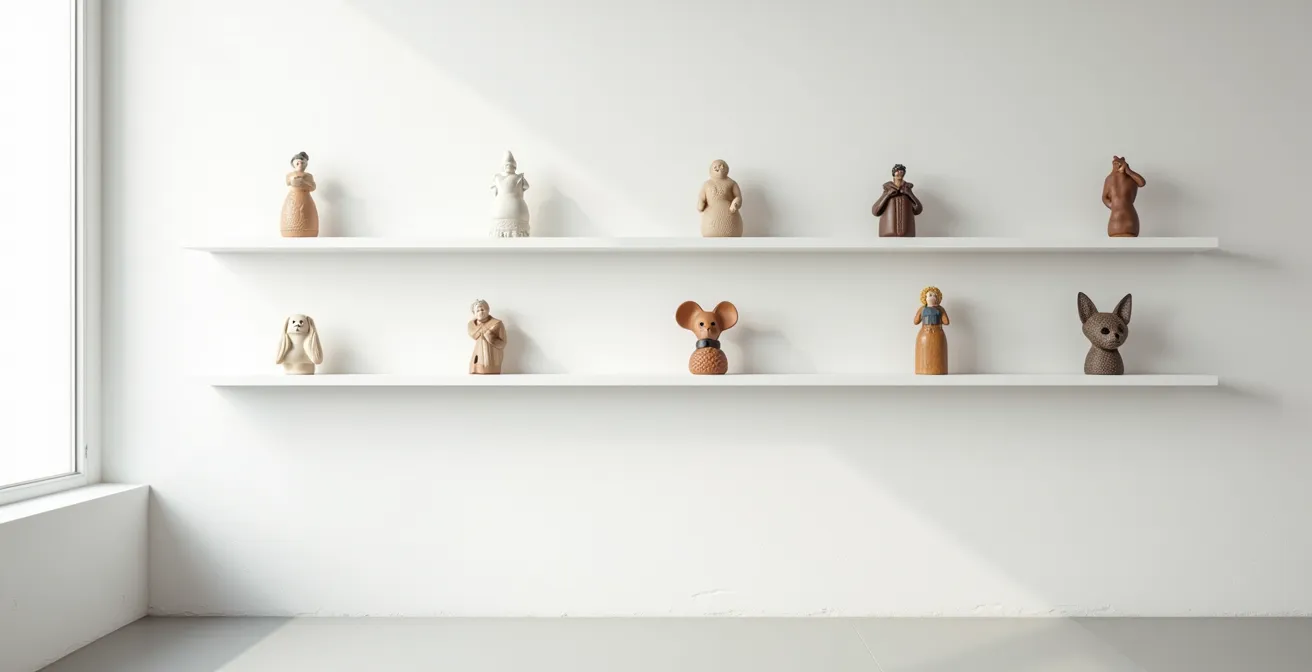
Rather than worrying about current trends, a more empowering approach is to understand the patterns of aesthetic evolution. As the minimalist display above illustrates, arranging items chronologically can reveal a fascinating story of changing styles. This perspective shifts your role from a passive owner of “stuff” to an educated observer of cultural history. Your collection becomes a tangible timeline, a personal museum of decorative arts.
The key is to detach the Symbolic Value (what the collection means to you) from its fluctuating market or trend value. A collection built on personal passion and knowledge will always have worth, regardless of whether it’s featured in a design magazine this month. Focus on what you love and what you can learn from your items. Track trends not to seek approval, but to understand the context in which your collection exists. This intellectual engagement is a core part of the curatorial process and provides a deep, lasting satisfaction that external validation never can.
The Appraisal Gap: Why Your Home Insurance Won’t Cover Your Antiques
One of the most dangerous assumptions an owner of a significant collection can make is that their standard home insurance policy provides adequate coverage. In reality, most policies have strict, low limits for categories like jewelry, art, and antiques. This creates a significant “appraisal gap”—the difference between what your collection is actually worth and what your insurer will pay out in the event of a fire, theft, or other disaster. Without specific documentation and a separate policy rider, your life’s passion could be financially worthless in an instant.
This is where the distinction between Symbolic Value and documented market value becomes critically important. Your emotional attachment to an object has no bearing on an insurance claim. Insurers require cold, hard proof of value in the form of a professional appraisal. Ignoring this step is a common mistake that differentiates a casual accumulator from a serious collector who is actively protecting their assets. A collection that isn’t properly insured is, from a financial standpoint, simply “stuff.”
Securing proper coverage is a multi-step process that requires diligence and proactive management. It involves not just getting an initial appraisal, but also keeping it updated as market values change. The following steps provide a clear roadmap for closing the appraisal gap and protecting your investment.
- Find a certified appraiser through a reputable organization like the Appraisers Association of America.
- Document the provenance of each key item with any available receipts, certificates of authenticity, or historical records.
- Obtain a formal, written appraisal that includes detailed descriptions and photographs of the items.
- Contact your insurance agent and request a “Scheduled Personal Property” rider or a separate collections policy for your items.
- Carefully review the policy for specific coverage details, including protections against damage during transport or “mysterious disappearance.”
- Set a reminder to have your collection re-appraised every 3-5 years to account for market fluctuations.
Key Takeaways
- The line between collecting and hoarding is psychological, defined by the narrative and rituals associated with your objects, not their quantity.
- “Guilt Keepers” are a primary source of clutter; releasing them requires separating the memory of a person from the object itself.
- Active “Curatorial Rituals”—like systematic cleaning, organizing by theme, and cataloging—are essential actions that transform chaos into a valued collection.
When Does an Avant-Garde Become Kitsch?
The journey of an object’s aesthetic value is rarely linear. An item celebrated as avant-garde in one decade can easily be dismissed as tacky kitsch in the next, only to be rediscovered and revered as “vintage” or “retro” a generation later. Think of the sharp, geometric patterns of Art Deco, the organic forms of Mid-Century Modern, or the bold, sometimes garish, colors of 1980s Memphis design. Each had its moment of being cutting-edge, followed by a period of being deeply unfashionable.
Understanding this cycle is liberating for a collector. It detaches the act of collecting from the need for constant, contemporary approval. The true curator collects what speaks to them, confident that aesthetic value is subjective and fluid. They are not chasing trends; they are documenting a moment in time. The collector who held onto their lava lamps and shag rugs through the minimalist ’90s was ultimately rewarded when the ’70s aesthetic came roaring back into vogue.
This transition from avant-garde to kitsch and back again is often driven by overproduction and mass-market saturation. When an innovative design becomes too common, its “coolness” factor diminishes. It becomes familiar, then dated. Kitsch is, in many ways, an avant-garde idea that has become a victim of its own success. A collector’s role, then, can be seen as that of a cultural preservationist—protecting these objects during their “kitsch” phase until their historical and aesthetic significance can be appreciated anew. This long-term perspective is a vital part of a mature collecting philosophy.
Why That Flower Pattern Might Be a Political Statement?
The final layer of curation is to understand that objects are rarely just objects. They are encoded with the history, values, and even the secret rebellions of their time. The most seemingly innocuous decorative element, like a floral pattern, can carry a powerful hidden meaning. This deepens the Object-Narrative from a personal story to a connection with a larger cultural history. Your collection is not just a group of things; it is a library of silent stories.
A true curator looks beyond the surface aesthetic to uncover these embedded narratives. This final Curatorial Ritual—the act of research and interpretation—is what gives a collection its soul. It transforms the owner from a mere accumulator into a knowledgeable custodian of history. Recognizing the hidden language in your possessions is the ultimate expression of control and engagement, the polar opposite of being passively buried under a mountain of meaningless clutter.
Case Study: Victorian Floriography as Coded Resistance
During the socially restrictive Victorian era, the “language of flowers” known as floriography became a vital and subversive communication tool. As noted in historical analyses of the period, women used floral motifs in embroidery, painting, and decorative arts to express political opinions that were otherwise forbidden. Purple irises, for example, symbolized wisdom and valor within the women’s suffrage movement, while the simple yellow rose could represent a statement of female solidarity. This historical precedent beautifully illustrates how decorative patterns have long served as a vehicle for complex and even radical messages hidden in plain sight.
By understanding this potential for hidden meaning, you can look at your own collection with new eyes. That porcelain teacup isn’t just a teacup; it may be a statement about class, trade, or social ritual from a bygone era. This search for meaning is the ultimate purpose of a collection.
Begin today by selecting one object from your collection. Instead of just dusting it, take the time to research its history, document its story, and decide on its perfect place in your home. This single act of intentional curation is the first step in transforming your relationship with everything you own.