Decorative Arts
Decorative arts occupy a unique position in the cultural landscape, bridging the gap between functional utility and aesthetic beauty. Unlike fine arts created purely for contemplation, decorative objects were designed to be used, touched, and integrated into daily life—yet they were crafted with such skill and artistry that they transcend mere practicality. From the painstaking labor of medieval illuminated manuscripts to the chemical mysteries of porcelain production, these objects tell stories of human ingenuity, technological advancement, and evolving taste.
Understanding decorative arts requires more than appreciating surface beauty. It demands knowledge of techniques passed down through generations, an awareness of the materials’ inherent challenges, and insight into the economic and social contexts that shaped their creation. Whether you’re drawn to the shimmer of gilded surfaces, the delicate brushwork on ceramics, or the structural complexity of mixed-material furniture, this field offers endless opportunities for discovery. This article provides a comprehensive foundation for navigating the world of decorative arts, from recognizing quality craftsmanship to preserving these objects for future generations.
The Foundations of Traditional Craftsmanship
The creation of decorative arts has always been a labor-intensive endeavor, demanding specialized skills honed over years of apprenticeship. Understanding these foundational techniques helps us appreciate not only the objects themselves but also the human effort embedded in every detail.
The Medieval Manuscript Tradition
The production of illuminated manuscripts represents one of the most demanding artistic processes in history. Before a single stroke of ink touched the page, scribes faced the grueling task of preparing parchment from animal skin—a process requiring precise timing, chemical treatments, and physical labor to achieve the smooth, luminous surface necessary for fine calligraphy and painting.
Within monastic scriptoria, a strict hierarchy of labor governed production. Senior scribes handled the most valuable texts, while junior copyists worked on less critical sections. This system, while efficient, introduced human error into the process. Common copyist mistakes—repeated words, skipped lines, or misread abbreviations—offer modern scholars invaluable clues about how texts were transmitted and understood across centuries.
As demand increased, manuscript production gradually transitioned from monastic workshops to urban commercial centers. This shift brought new challenges, including increased exposure to pigment toxicity. Many vibrant colors relied on heavy metals: vermilion contained mercury, verdigris was made from copper, and lead white posed serious health risks to painters who worked with these materials daily in poorly ventilated spaces.
The Art and Science of Gilding
Few techniques in decorative arts command as much reverence—and present as many challenges—as gilding. The application of gold leaf, typically hammered to a thickness of just 0.1 microns, requires steady hands, perfect environmental conditions, and deep technical knowledge.
Two primary methods dominate the field:
- Water gilding: Produces a mirror-like finish that can be burnished to extraordinary brilliance, but remains vulnerable to moisture and requires multiple preparatory layers of gesso and clay
- Oil gilding: Creates a more durable bond suitable for exterior applications or frequently handled objects, though it cannot be burnished to the same luminous quality
- Mercury gilding (ormolu): A now-banned technique that created the distinctive fire-gilt bronze mounts on fine furniture, achieved by amalgamating gold with mercury and heating the object to evaporate the mercury—a process that poisoned countless artisans
The symbolic meaning of gold in religious art extends beyond mere decoration. In Christian iconography, gold backgrounds represented divine light and the eternal realm, removing figures from earthly space and time. This theological significance meant that even economically struggling communities would invest in gilded altarpieces, viewing them as windows to the sacred rather than mere expenditures.
Materials and Techniques That Define Quality
Mastery of materials separates exceptional decorative arts from ordinary production. Each medium presents unique technical challenges that test the artisan’s skill and understanding of physical chemistry.
The Chemistry of Porcelain
For centuries, European potters struggled to replicate Chinese porcelain, unable to crack the “arcanum”—the secret formula that produced objects of translucent whiteness and remarkable strength. The breakthrough required understanding the interaction between kaolin (china clay) and petuntse (china stone) at firing temperatures exceeding 1,300°C, hot enough to vitrify the clay body into a glass-like substance.
These extreme temperatures carried significant risks. Kiln collapse could destroy months of work in minutes. Temperature variations of just 50 degrees could mean the difference between perfectly fused porcelain and warped, discolored failures. This technical difficulty expl
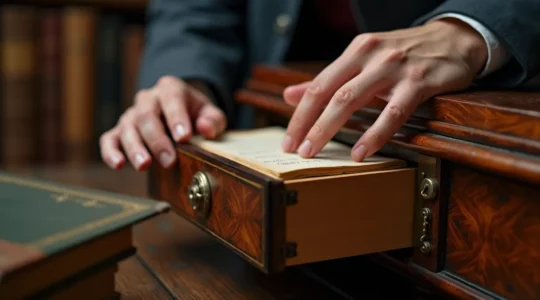
How to Find the Secret Drawer in an Antique Desk: A Specialist’s Guide
Finding a secret drawer isn’t about luck; it’s about decoding the mechanical philosophy of the craftsman who built it. Examine the piece not just for what you see, but for the “negative space”—the volume that seems unaccounted for. Treat the…
Read more
Why Your Sculpture Looks Dead in the Corner?
A sculpture’s life depends not on its intrinsic beauty, but on the spatial dialogue it has with its environment. The perceived emotion of a piece is directly manipulated by pedestal height and the strategic use of shadow. Protecting an artwork’s…
Read more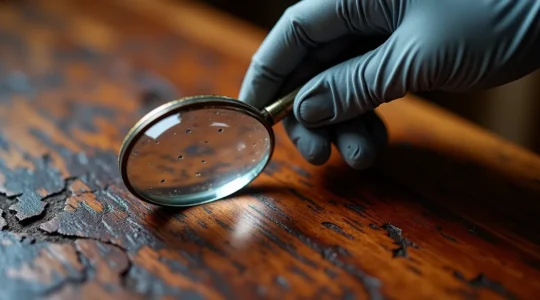
Can You Legally Sell Your Grandmother’s Rosewood Table? A CITES Compliance Guide
The legality of selling antique furniture made from exotic woods depends entirely on your ability to prove its age and origin; the burden of proof is on you, the seller. Most *Dalbergia* rosewoods are CITES-regulated, making undocumented sales a significant…
Read more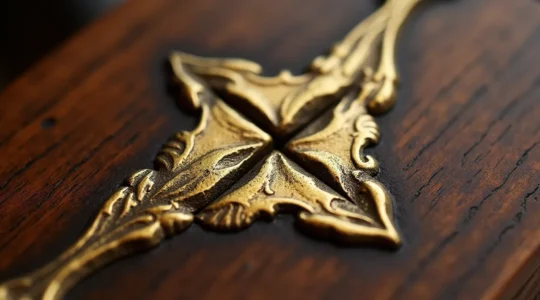
Why Bronze Mounts Break Wood: The Physics of Antique Furniture
The catastrophic splitting of wood around bronze mounts is not random, but a predictable failure of structural engineering. Wood is an anisotropic material; its movement is non-uniform and powerful when subjected to humidity changes. Bronze mounts act as a fixed…
Read more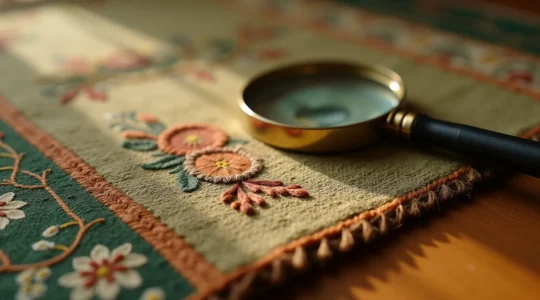
Beyond the Weave: How to Distinguish an Investment-Grade Aubusson from a Mere Copy
The real value of an Aubusson tapestry for an investor is determined less by its age and more by its commercial viability: a blend of artistic fame, manageable size, and market desirability. A tapestry’s worth is magnified when linked to…
Read more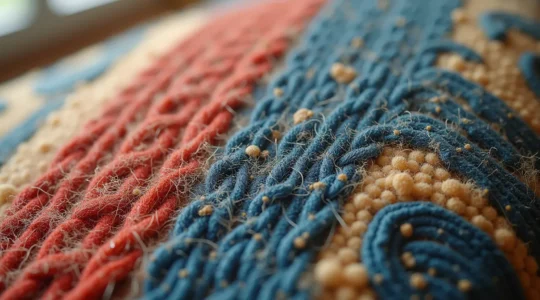
Why Light Is the Number One Enemy of Your Tapestry?
Protecting a historic tapestry goes far beyond simply keeping it out of the sun; it requires understanding the invisible molecular warfare light wages on its very structure. Fugitive dyes, especially the yellow components in green, degrade chemically, altering the artwork’s…
Read more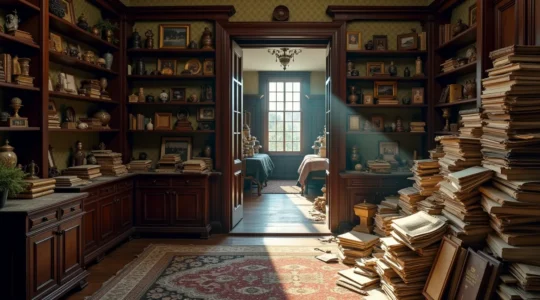
Hoarder or Collector: When Does Ornamentation Become Clutter?
Contrary to popular belief, the difference between a collector and a hoarder isn’t the quantity of items, but the owner’s relationship with them—specifically, the presence of a clear narrative and intentional rituals. Overwhelming clutter often stems from “Guilt Keepers”—objects retained…
Read more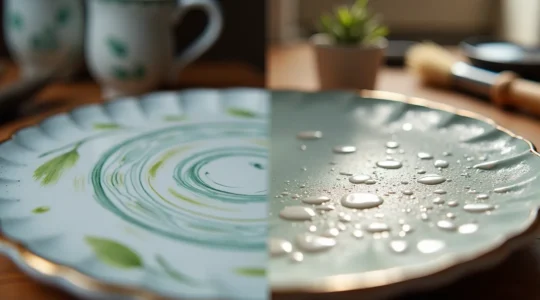
How to Spot a Transfer Print Disguised as Hand-Painting
The key to distinguishing a transfer print from hand-painting is not just looking for imperfections, but knowing which imperfections are human and which are mechanical. Hand-painting reveals variations in line weight and color pooling, the “signature” of the artist’s hand….
Read more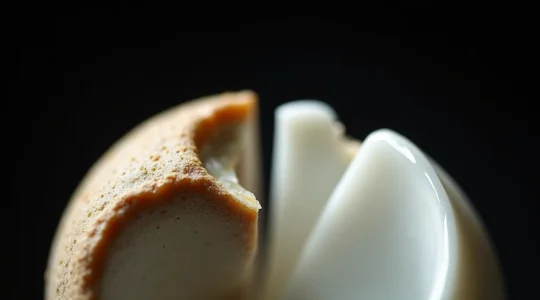
Why Does Faience Chip? A Restorer’s Guide to Understanding Its Fragile Beauty
Contrary to the simple belief that faience is just “soft” pottery, its tendency to chip comes from a beautiful, inherent conflict within its structure. The porous earthenware body and the glassy tin-glaze expand and contract at different rates, creating a…
Read more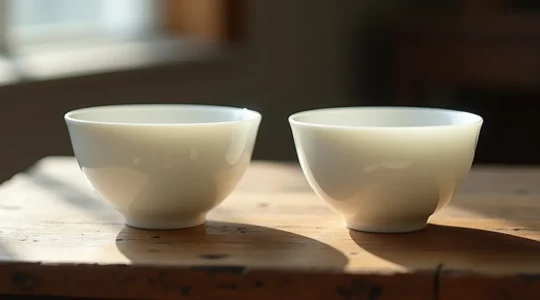
Hard-Paste vs. Soft-Paste: A Material Science Guide to Porcelain Value
The value of porcelain is not merely a matter of its mark or age; it is chemically bonded to its very molecular structure and the physics of its creation. Hard-paste porcelain’s strength comes from the complete vitrification of kaolin and…
Read more