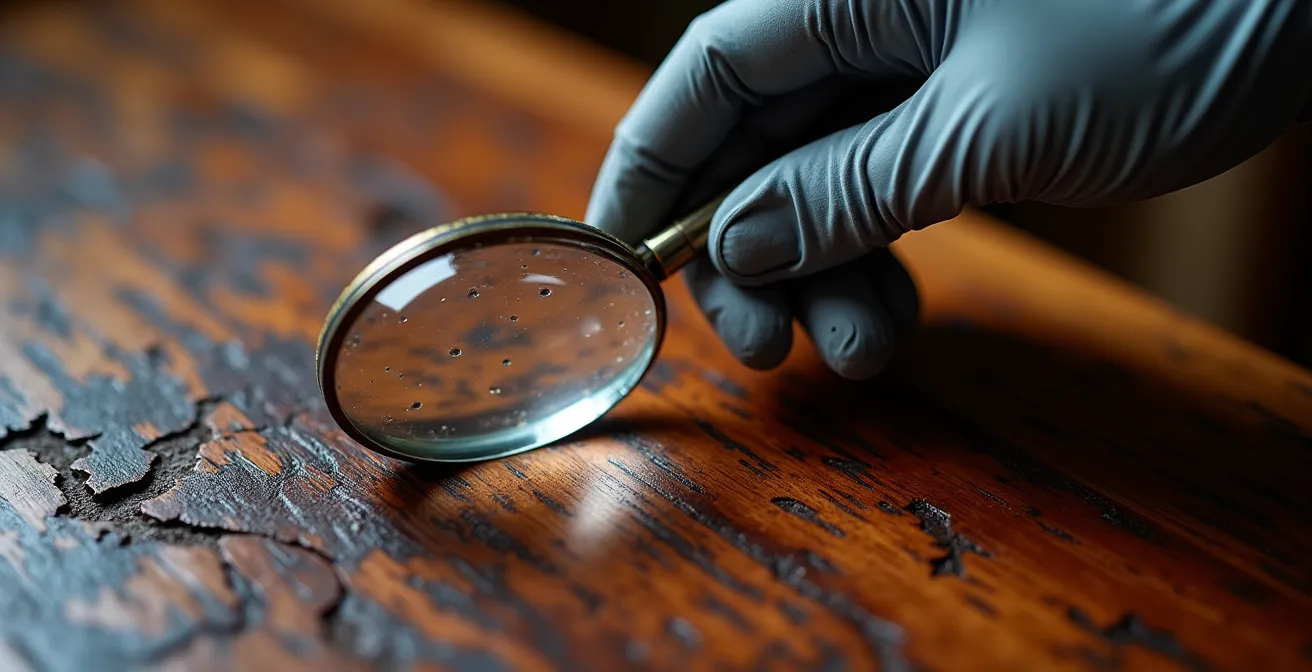
The legality of selling antique furniture made from exotic woods depends entirely on your ability to prove its age and origin; the burden of proof is on you, the seller.
- Most *Dalbergia* rosewoods are CITES-regulated, making undocumented sales a significant legal risk.
- A “pre-1947” manufacturing date is a key exemption, but it requires robust documentation, not just stylistic claims.
Recommendation: Before listing any item for sale, commission a professional appraisal and document a complete provenance chain to avoid seizure and penalties.
That heirloom rosewood table you inherited from your grandmother could be a valuable antique or a significant legal liability. For owners and dealers of furniture made from exotic woods, the question of its legality is no longer a simple matter. The international laws governing endangered species, primarily the Convention on International Trade in Endangered Species of Wild Fauna and Flora (CITES), have become increasingly stringent. Many believe that an item being an “antique” is a blanket protection against these rules, but this is a dangerous and often costly misconception.
The common advice to simply “check CITES” is insufficient. The regulations are a complex web of appendices, exemptions, and documentation requirements that can confuse even seasoned dealers. The core issue is not just identifying the material but proving its history. The responsibility—and the legal risk—falls squarely on the seller to provide irrefutable evidence that the item complies with the law. Ignorance of the wood’s identity or its date of manufacture is not a valid defense in the eyes of regulators.
This guide moves beyond generic advice. It adopts the cautionary perspective of a regulatory expert, focusing on the principle of “burden of proof.” We will dissect the steps you must take to build a legal case for your antique, from forensic wood identification and paperwork authentication to understanding the nuances of repairs and mixed materials. This is not just about a sale; it’s about undertaking the necessary due diligence to protect yourself and preserve the cultural value of these beautiful but embattled objects. The following sections will provide a clear roadmap for navigating this complex legal landscape.
To navigate the complexities of CITES and antique furniture, this article breaks down the essential areas of compliance you must master. The summary below outlines the key topics we will explore, from identifying regulated materials to securing the correct documentation.
Summary: A CITES Compliance Guide for Antique Woods
- Dalbergia and Ebony: Spotting Banned Woods with the Naked Eye
- Proving the Date: The Paperwork You Need to Export Antiques
- Patching with Substitutes: Ethical Restoration of Endangered Veneers
- The Vanishing Green: Why “Bois Vert” Turns Brown in UV Light
- The Turtle Problem: Managing Tortoiseshell Inlay in a Plastic World
- Why Tree Rings Are More Reliable Than Stylistic Analysis
- Fill or Leave: When Does Repairing a Chip Lower the Value?
- How to Find the Secret Drawer in Your Antique Desk?
Dalbergia and Ebony: Spotting Banned Woods with the Naked Eye
The first step in assessing your legal risk is identification. The name “rosewood” is not a single species but a broad category, with the *Dalbergia* genus being the most scrutinized. Under international law, the regulatory net is cast wide; a landmark decision now means that over 300 species of the Dalbergia genus are protected under CITES Appendix II. This places the burden of proof squarely on the owner to demonstrate that their item is not from a restricted species or that it meets exemption criteria. Assuming your dark, dense wood is a common type is a significant gamble.
While definitive identification requires expert analysis, a preliminary visual inspection can raise red flags. True rosewoods often display deep, rich purplish-brown colors with distinctive black figuring (known as “spider-webbing” in Brazilian rosewood). They are also exceptionally dense and heavy compared to common substitutes like stained mahogany. A subtle but classic clue for rosewood is its faint, sweet, rose-like scent when a new surface is exposed, though this is not a practical test for a finished antique.
The consequences of misidentification are severe. In a well-known case, an auction house had to withdraw over 80 lots of Danish modern furniture from a sale. The pieces, made in the 1950s and ’60s, were crafted from rosewood after the CITES pre-convention date, and without the required Article 10 certificates, their sale would have been illegal. This serves as a stark reminder: without proper certification, even visually stunning pieces become untouchable in the legitimate market. Your initial “naked eye” assessment should therefore be a tool for caution, prompting further investigation rather than providing a final answer.
Proving the Date: The Paperwork You Need to Export Antiques
Once you suspect an item is made from a CITES-regulated wood, the single most important factor in determining its legality is its age. However, simply claiming an item is an “antique” is not enough; you must prove it with documentation. This is where your “burden of proof” becomes a tangible task of assembling a historical record. The goal is to establish a verifiable provenance chain that demonstrates the item was manufactured or “worked” before specific legal cut-off dates.
The rules vary by species and jurisdiction. For Brazilian rosewood (*Dalbergia nigra*), which is on the highly restrictive Appendix I, the requirements are exceptionally strict. As the experts at ANTIQUES ROADSHOW clarify:
Brazilian rosewood products may be imported and exported commercially only if presented with documentation from CITES certifying that it was acquired prior to June 11, 1992.
– ANTIQUES ROADSHOW, PBS Understanding Rosewood Regulations
For many other rosewoods on Appendix II, there is a crucial “antique exemption.” In the UK and EU, for example, an item is generally considered exempt if it can be proven to have been made before March 3, 1947. This proof cannot be based on style alone. It requires concrete evidence such as dated receipts, family letters mentioning the piece, old photographs showing it in a period setting, or a sworn affidavit from a certified appraiser. Without this paperwork, the item is legally treated as if it were made yesterday.
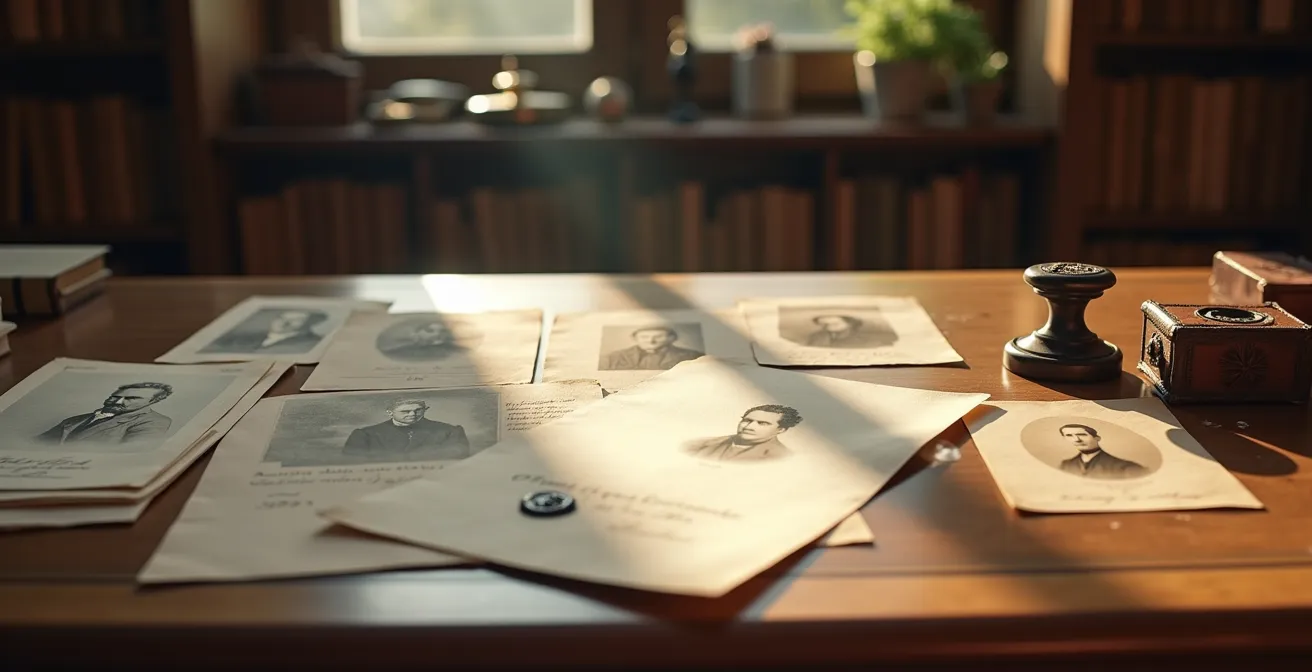
Assembling these documents is akin to a forensic investigation. You are not merely collecting papers; you are building a legal case for your object. Each document adds a layer of evidence, reinforcing the timeline and establishing that the piece was a “worked item” before the CITES regulations came into effect. This file of evidence becomes as valuable as the object itself, as it is the key to unlocking its market value and ensuring its legal sale.
Patching with Substitutes: Ethical Restoration of Endangered Veneers
The issue of CITES compliance extends beyond the original state of an antique; it deeply impacts how it can be restored. If a piece of furniture with endangered veneer is damaged, you cannot simply replace the missing section with the same CITES-listed wood. Doing so would constitute new use of a regulated material, creating a legal minefield. The only ethical and legal approach is to use non-regulated substitute woods that are carefully chosen to match the color and grain of the original.
This process of “ethical restoration” demands meticulous documentation. Any restorer must act with the same rigor as a museum conservator. Before any work begins, the original damaged state must be photographed in detail. All materials used for the repair, from the substitute veneer to the glues and finishes, must be documented with receipts and material safety data sheets where applicable. This creates a clear record that no new CITES-listed material was added to the piece.
Obtaining the necessary paperwork for post-1947 items already involves costs that can be prohibitive, with certificate fees sometimes being a significant portion of the item’s value. Adding undocumented repairs only complicates this further. A properly documented restoration using substitutes, however, can preserve the item’s integrity and value. The key is transparency. An invoice from a restorer that simply says “repaired veneer” is worthless. A detailed log of the conservation process is essential evidence. This documentation protects the owner, the restorer, and the future marketability of the piece.
Action Plan: Documenting Legal Restoration Work
- Document Original State: Take detailed photographs of the furniture, including close-ups of the damage, before any restoration work begins.
- Source Substitutes: Obtain and keep all receipts for non-CITES listed substitute materials (veneers, solid woods) used in the repairs, ensuring they have their own provenance.
- Create a Restoration Log: Maintain a detailed log noting the dates of work, a description of the methods used, and a list of all materials applied (e.g., type of glue, finish).
- Apply for a Certificate if Needed: If the piece was made after 1947, apply for the necessary Transaction Specific Certificate (TSC) and include the restoration log as part of the application.
- Ensure Full Transparency: Keep all restoration documents with the item’s other provenance papers to present to future buyers or auction houses, proving ethical and legal compliance.
The Vanishing Green: Why “Bois Vert” Turns Brown in UV Light
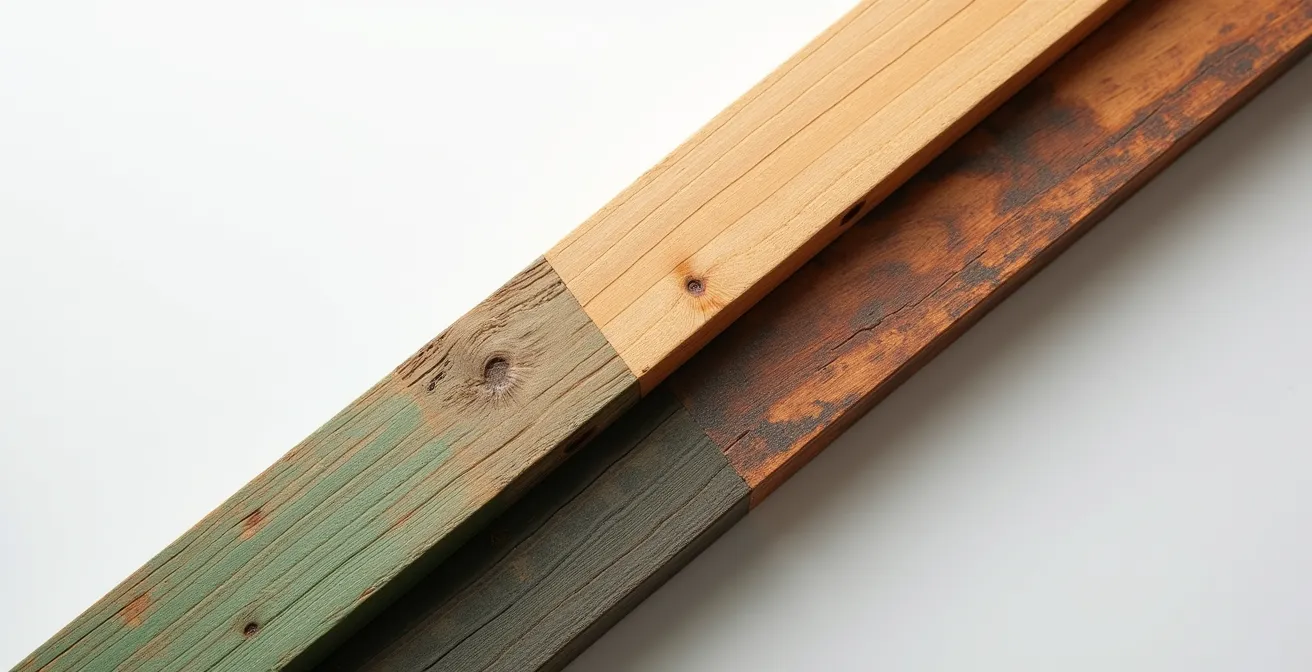
The very nature of wood aging can serve as a powerful, albeit complex, tool in the authentication process. Certain exotic woods are famous for their dramatic color shifts over time, a process driven primarily by exposure to ultraviolet (UV) light. One of the most notable examples is Lignum vitae, often historically referred to as “bois vert” or green wood. When freshly cut, its heartwood can display a remarkable range of greenish-brown hues. However, with prolonged exposure to light, these vibrant tones oxidize and polymerize, transforming into a deep, dark brown or nearly black patina.
This photochemical transformation is a form of natural clock. A piece of furniture exhibiting the deep, stable brown of fully aged Lignum vitae is unlikely to be a recent creation. The presence of a greenish tint, especially in a protected area like the underside of a lid or inside a drawer, compared to a dark exterior, can provide strong circumstantial evidence of significant age. This is not foolproof, but it is a data point that a knowledgeable appraiser will use in their overall assessment. Understanding this process is crucial for owners, as what might be perceived as fading or damage could in fact be a key indicator of authenticity and age.
Protecting antique furniture from further UV damage is a primary goal of conservation. For valuable pieces, this means strategic placement away from direct sunlight and the potential use of museum-grade UV-filtering varnishes or archival waxes. As professional restorer Rodney Keyser notes, for some sun-damaged finishes on woods like Indian rosewood, specific treatments with materials like linseed oil can revive the finish without aggressive stripping, preserving the aged patina. This careful management of an object’s surface is part of the custodian’s duty, balancing preservation with the retention of historical evidence encoded in the wood’s color.
The Turtle Problem: Managing Tortoiseshell Inlay in a Plastic World
The regulatory challenges of antique furniture are not limited to the wood itself. Many high-value pieces, particularly from the 17th to 19th centuries, incorporate other CITES-listed materials like tortoiseshell, ivory, and mother-of-pearl. Tortoiseshell, sourced from the hawksbill sea turtle, is a CITES Appendix I material, meaning it is subject to the highest level of trade restriction. If your rosewood desk features tortoiseshell inlay, you are now dealing with two separate but overlapping sets of complex regulations.
As with rosewood, there are “antique” or “worked item” exemptions for tortoiseshell. However, the cut-off dates and rules can differ. In the EU, for instance, the exemption applies to items worked before 1975, while in the US, it is often pre-1947. Proving this is subject to the same high burden of proof. Furthermore, some countries have near-total bans on the commercial trade of tortoiseshell, regardless of age. This “material liability” means that the presence of even a small amount of inlay can render an entire piece unsellable in certain markets.
The regulations are filled with specific, and sometimes confusing, exemptions. For instance, in the world of musical instruments, there is a “finished product” exemption for items containing CITES-listed woods weighing less than 10 kilograms (about 22 lbs). This allows most guitars and violins to travel and be sold with less red tape, but it deliberately excludes larger items like furniture. The table below, based on a comparative analysis from industry leaders, illustrates how different materials on a single piece can trigger vastly different legal requirements.
| Material | CITES Status | Pre-1947 Exemption | Documentation Required |
|---|---|---|---|
| Brazilian Rosewood | Appendix I | No automatic exemption | CITES permit + proof of pre-1992 acquisition |
| Other Dalbergia species | Appendix II | Yes | Article 10 Certificate if post-1947 |
| Tortoiseshell | Appendix I | Yes (US: pre-1947, EU: pre-1975) | Worked item exemption documentation |
| Elephant Ivory | Appendix I | Varies by country | Complex – consult authorities |
This complexity underscores a critical rule for owners: an antique must be evaluated for all its component materials. Each material carries its own history and regulatory baggage, and you must be prepared to document each one.
Why Tree Rings Are More Reliable Than Stylistic Analysis
When provenance documents are missing, sellers often fall back on stylistic analysis to date an antique. An appraiser might argue that a piece is “in the style of Louis XV” or “exhibits Chippendale characteristics.” While this provides context, it is not considered definitive proof by regulatory bodies. Styles can be copied, revived, and faked. For a more scientific and legally robust method of dating, experts turn to dendrochronology, or the science of dating wood by its tree rings.
Dendrochronology involves taking a small core sample from an unobtrusive part of the furniture and analyzing the pattern of its growth rings. This pattern is then compared to established regional chronologies for that specific tree species. The method can be remarkably precise, though its success varies by wood type; one study found that a 79.2% success rate for pine, while oak was 67.8%. This scientific approach provides a hard date that is far more defensible than a subjective opinion on style.
The result of a dendrochronological report provides what is known as a `terminus post quem`, a Latin term for the “date after which.” This concept is crucial for legal authentication, as explained in the Journal of Visualized Experiments:
The dendrochronological report provides the dating as a calendar year indicating when the last tree ring was formed. The end date represents the terminus post quem, the year after which the instrument was made.
– Journal of Visualized Experiments, Dendrochronological Dating of String Instruments
In essence, if the last visible tree ring on a board dates to 1750, the tree could not have been felled before that year. This provides a scientific baseline for the item’s creation, making it a powerful tool to prove it predates the CITES 1947 cut-off. While it is an invasive and costly procedure reserved for potentially high-value items, dendrochronology represents the gold standard in forensic authentication when paperwork is absent, replacing subjective analysis with verifiable fact.
Fill or Leave: When Does Repairing a Chip Lower the Value?
The decision to repair a chip or crack in an antique is a delicate balance between aesthetics, function, and value. The old adage “a repair is always better than damage” is a dangerous oversimplification. In the world of high-end antiques, a poorly executed or overly invasive repair can diminish an item’s value more than the original flaw. The guiding principle among conservators is “do no harm” and to prioritize preservation over restoration.
The first consideration is the item’s rarity and provenance. For a historically significant or unique piece, originality is paramount. In this context, even a minor chip is part of the object’s history. A “conservation” approach would be to stabilize the chip to prevent further loss, but not to fill it. The goal is to preserve the authentic state of the piece for future generations. For a more common decorative item, a “restoration” approach, where the chip is skillfully filled and inpainted, might be more appropriate to restore its visual appeal and market value.
When a repair is deemed necessary, especially on a CITES-regulated item, several rules apply to protect its value and legality:
- Reversibility: Whenever possible, repairs should be reversible. This means using materials (like specific waxes or adhesives) that a future conservator can remove without damaging the original material.
- Documentation: Every intervention must be meticulously documented with photographs and a log of materials used. This transparency is crucial for future sales.
- Consultation: For any structural issue or significant damage on a valuable piece, consulting a certified conservator who is familiar with CITES regulations is non-negotiable.
Ultimately, a good repair is one that is stable, visually unobtrusive, and respects the history of the object. An ill-advised repair, however well-intentioned, can permanently erase historical evidence and significantly lower the financial and cultural value of your antique.
Key Takeaways
- Burden of Proof is Yours: Legally, you are responsible for proving an antique’s age and origin. Ignorance is not a defense.
- Documentation is Everything: A verifiable paper trail (receipts, photos, appraisals) is more valuable than stylistic analysis for proving CITES compliance.
- All Materials Matter: Regulations apply to all CITES-listed materials on a piece, including wood, ivory, and tortoiseshell. Each requires separate consideration.
How to Find the Secret Drawer in Your Antique Desk?
Beyond the legal complexities, the ownership of an antique can hold the thrill of discovery. Secret drawers and hidden compartments are not just a trope of fiction; they were a common feature in antique desks, cabinets, and chests. These compartments were designed to secure valuables, important documents, or personal letters. Finding one requires a curious mind and a gentle, methodical approach, treating the piece of furniture as a mechanical puzzle.
The search should always be non-invasive. Brute force is the enemy of an antique. Instead, begin with careful observation and measurement. Look for asymmetries: does one drawer seem shallower than the cabinet’s depth allows? Is there a piece of molding that looks unusually thick or has a small, inexplicable seam? Gently tap surfaces and listen for hollow sounds that might indicate a void behind a panel. Often, the release mechanism is disguised as part of the ornamentation—a small carved finial that twists, a decorative column that slides, or a knot in the wood that can be pressed.
Modern technology can aid this non-destructive exploration. Here are a few techniques for your treasure hunt:
- Use a smartphone with a macro lens to get a closer look at joint lines and panel edges for subtle inconsistencies.
- A small, bright LED flashlight held at an oblique angle to a surface can reveal hairline cracks or seams that are otherwise invisible.
- Look for unusual wear patterns on interior surfaces, which might indicate where a hidden release has been repeatedly activated over the centuries.
- For a more advanced approach, a small endoscopic camera (a “snake camera”) can be fed through existing gaps or keyholes to peer into hidden voids without any disassembly.
Finding a secret drawer is a delightful experience that connects you directly to the history of the object and the lives of its previous owners. It’s a reminder that these are more than just pieces of wood; they are artifacts with stories to tell. Just be sure that any documents you find inside are added to your all-important provenance file.
To ensure you are acting in full compliance with the law, the next logical step is to seek a professional appraisal from an accredited expert who specializes in CITES-regulated antiques. Do not attempt to sell or export the item until you have a complete and legally sound dossier of its provenance.